Allison Field Bell
Wind Tunnel
The NASA Ames Wind Tunnel is used to test launch vehicle components. How hard things shake, my partner paraphrases to me. Someone says, What a great metaphor — the wind tunnel.
We’ve been in the wind tunnel for too long — my partner and I. Things that weren’t shaking too hard are now breaking off. There’s so much to lose and yet hardly anything left. I have nothing to say to him. How’s the weather today? I ask. Clear blue skies. Brinking on a hundred this afternoon. Summer in Salt Lake.
There’s such a thing as a closed-loop wind tunnel. In this type of tunnel, the air recirculates continuously and allows for longer test times. I imagine with smoke, you could see the pattern of the wind folding back in on itself.
And there’s the metaphor: we’re folding back in on ourselves, tending to cherry tomatoes in the backyard and waiting for the finality of the thing. The last piece to separate and dissolve. Sun Sugar. Tiny orange buttons of flavor on those sticky fragrant vines. A hot mesh of green. And I don’t see him the same anymore. His body, his mistakes. The way he snores and laughs. He tells me he won’t marry me until I have a real job, real money, a retirement account. He tells me our bodies are deteriorating, and should I really be drinking so much?
What does it mean for an object to fail a wind tunnel test? Is there room for nuance? For example: if an object fails in the wind tunnel, does it still succeed in providing data points? Tighten up this bolt this much, streamline this surface to X degree.
I watch him move at a distance. Through a tunnel. Do you even like me anymore? I ask.
He doesn’t answer. He just sighs and stares out the window. Blue. Everything outside is blue and green and brown. I think about colors. About the way light makes color and maybe there’s something to a wind tunnel making objects. Instead of objects made for the wind tunnel.
Things I try not to think about: the house. Our shared ownership of it. What that looks like now.
The aerial view of the NASA Ames Wind Tunnel shows it in the middle of some kind of factory, among other factories. It’s not a secret lab in the desert like I imagined, it’s more like a box store in the suburbs.
He tells me the way to accumulate wealth is through property. He tells me that, at this rate, if he wants to retire at 65, he’ll only get $45,000 dollars a year from retirement until he’s 80. He tells me he doesn’t want children ever — it’s irresponsible. Climate change, mental illness, etc.
Back in the wind tunnel, I imagine metal. Metal and wind. I don’t really understand it. What do I understand? The idea of being thirty-six and alone. I couldn’t be more afraid. To be freed.
The wind tunnel can only be operated at night. It strains the power grid. What perfect insight. The word strained. I consider telling him what I want, what I need. But the problem is: it doesn’t involve him anymore. I consider the wind tunnel. Fatal for a body of flesh, I imagine. All that pressure and air. I imagine all those wind tunnel men sitting at their screens, watching numbers flicker. Launch vehicles is the adult way of saying spaceships. I wish I knew how to detach myself. His body heat in the night. The way he draws me into his arms. The space he leaves in the sheets when he rises.
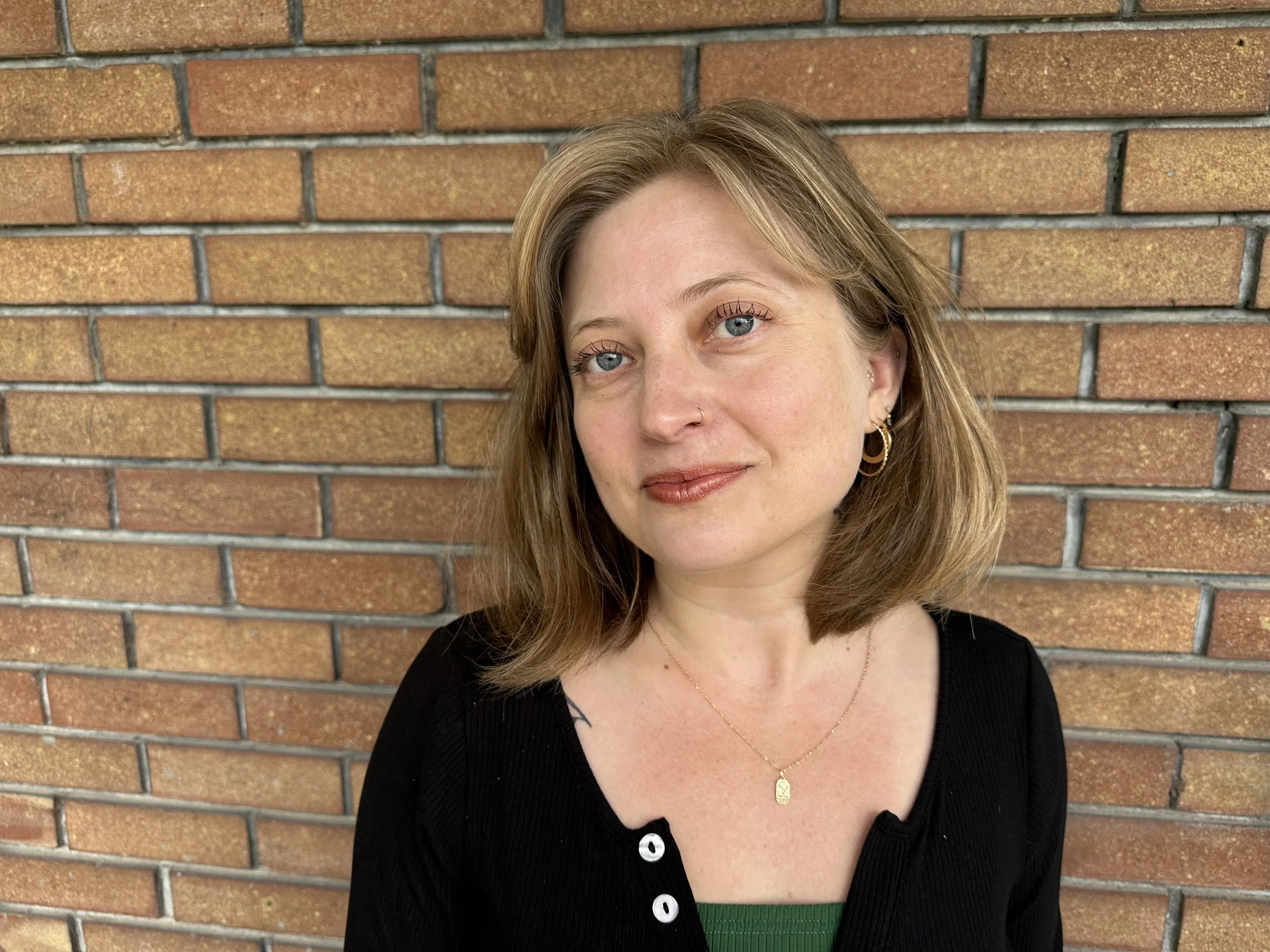
Allison Field Bell is a multi-genre writer from California. She is the author of two forthcoming collections: Bodies of Other Women (fiction) and All That Blue (poetry). She is also the author of three chapbooks, Stitch (forthcoming), Without Woman or Body, and Edge of the Sea. Find her at allisonfieldbell.com.
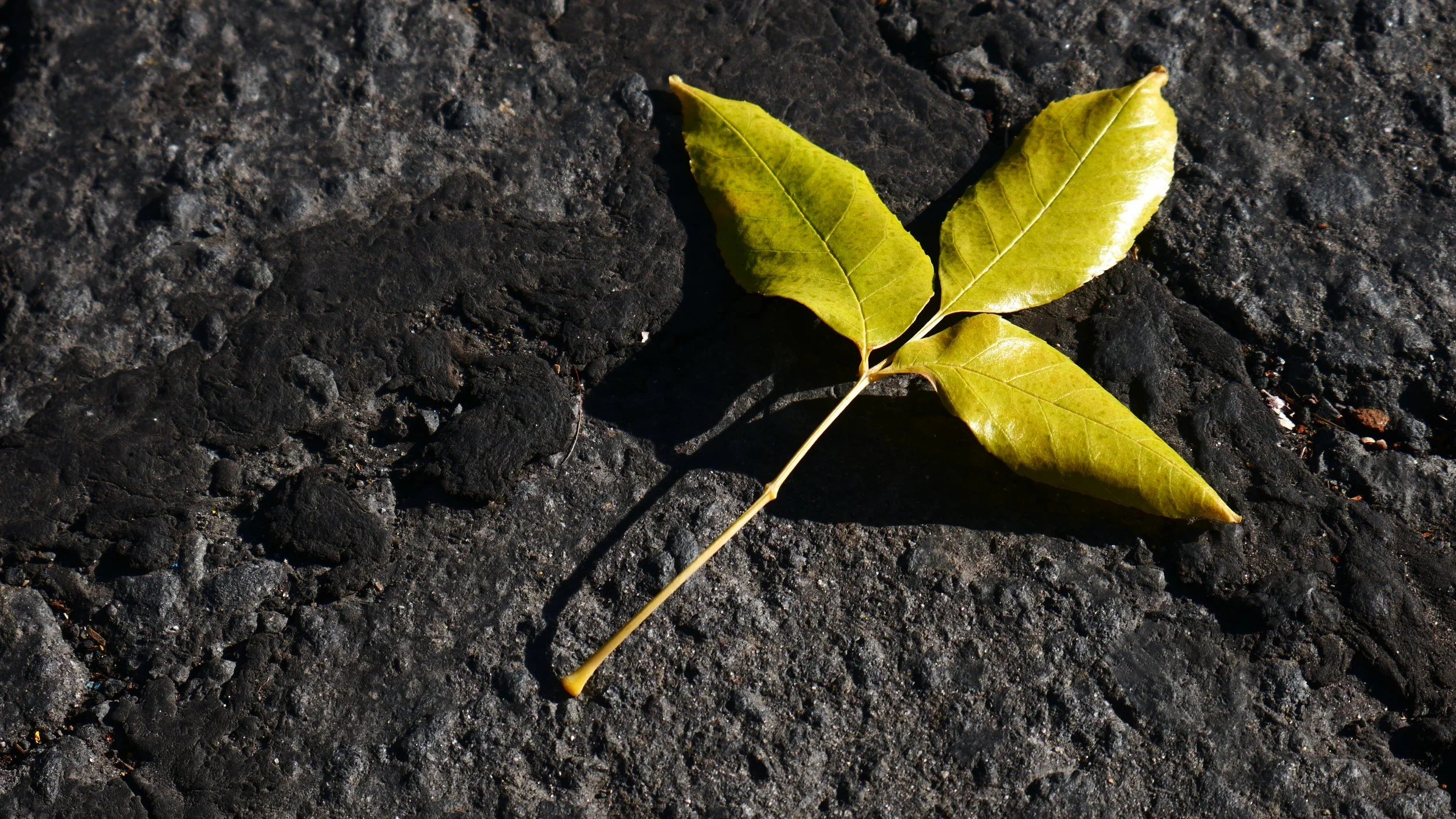
Artwork: “Bird-Leaf” by Daniel Lurie
Digital