CMarie Fuhrman
How to Bury a Dog
There will never be a right shovel. But you
must choose one. The same goes for the ground
you’ll open. Walk three paces, turn around
three times, this is where you will lay her down.
Brings scraps of cloth and stones. When the earth
has howled open her great brown lips,
step inside. Place your open palm to soil
that has not felt light since its creation
feel it’s cool. This is not indifference, but trust.
Line the floor with strips of yellow cotton, wildflowers
or the bouquet you bought to make the room where she will die
seem brighter. Place the necklace with your name there.
Make peace with this: she no longer needs you.
The shovel cannot be used again for any mundane purpose,
this blade that patted her last bed, can only dig gardens.
The stones you place are regret, granite and lichen
of having to leave her at home, in the car, on the leash,
with a friend, as once more you freely walk away. The stones
weigh so much, but are necessary, as the vet said,
to keep the bear out. Now you may sing. You may
pray or lie down or dream about reaching
through the darkness to stroke her one last time.
I recommend you find a spell, some magic,
a packet of seeds. She was never one for leaving
so it’s you who must go, shovel over shoulder,
and walk back to the house. The house
so empty it howls. The place where laid her bed,
the bed you must carry from the house, and throw away.
Trillium arose overnight in the place
where we buried the dogs. Three.
I left them as offerings, both dogs & tears.
I offered the Earth beings of dedication &
loyalty, & the response was ivory & three
petaled. I am a person of graves. Of places
where lives once were. Ghost towns.
Decrepit houses. I walk abandoned streets
the way others walk suburban neighborhoods:
with arms full of zucchini to give away.
I suppose I am looking for what the dead have left
what these offerings of life have come to bear.
I look into the leaded glass of old saloons to hear
the piano music and laughter. I suppose
I am hoping that something beautiful
might bloom in this place I leave behind.
The Limp and the Lead
In the dark of a Thursday morning we walk the gravel road
away from home. The sound of ten feet, eight of them paws,
upon sharp rock is loudest before sunrise. I think myself brave
as I douse the flashlight in this country of bears and cougars
and neighbors whose names light up my computer screen
when I search the registry of sex offenders, remember the cops
coming when Jesse held his family hostage, when Jerry’s
meth sales were booming and buyers parked at the bottom
of our driveway to wait their turn for an escape I am too
tethered to this existence to make. I have stopped being careful.
I want too much to be of the world. To walk among
the fears that keep others inside. Foolishly wanting to befriend
them the way that I have tried to befriend birds who strike
windows. There is probably a judgment in that. So when I hear
the scrape of gravel behind me, I turn to find the old dog
clawing the road bed for the purchase the earth once guaranteed
him. This will break my heart. This will cause me to question
my bravado, to see that mortality escapes no one. He rises,
a limp fashioned to that once lithe body, and we turn for home.
What kind of monster drags her dogs through the dark
of a morning and thinks she will survive? The young dog
pulls at the rope of my right arm and we swerve into the spirea
as if to say: this one.
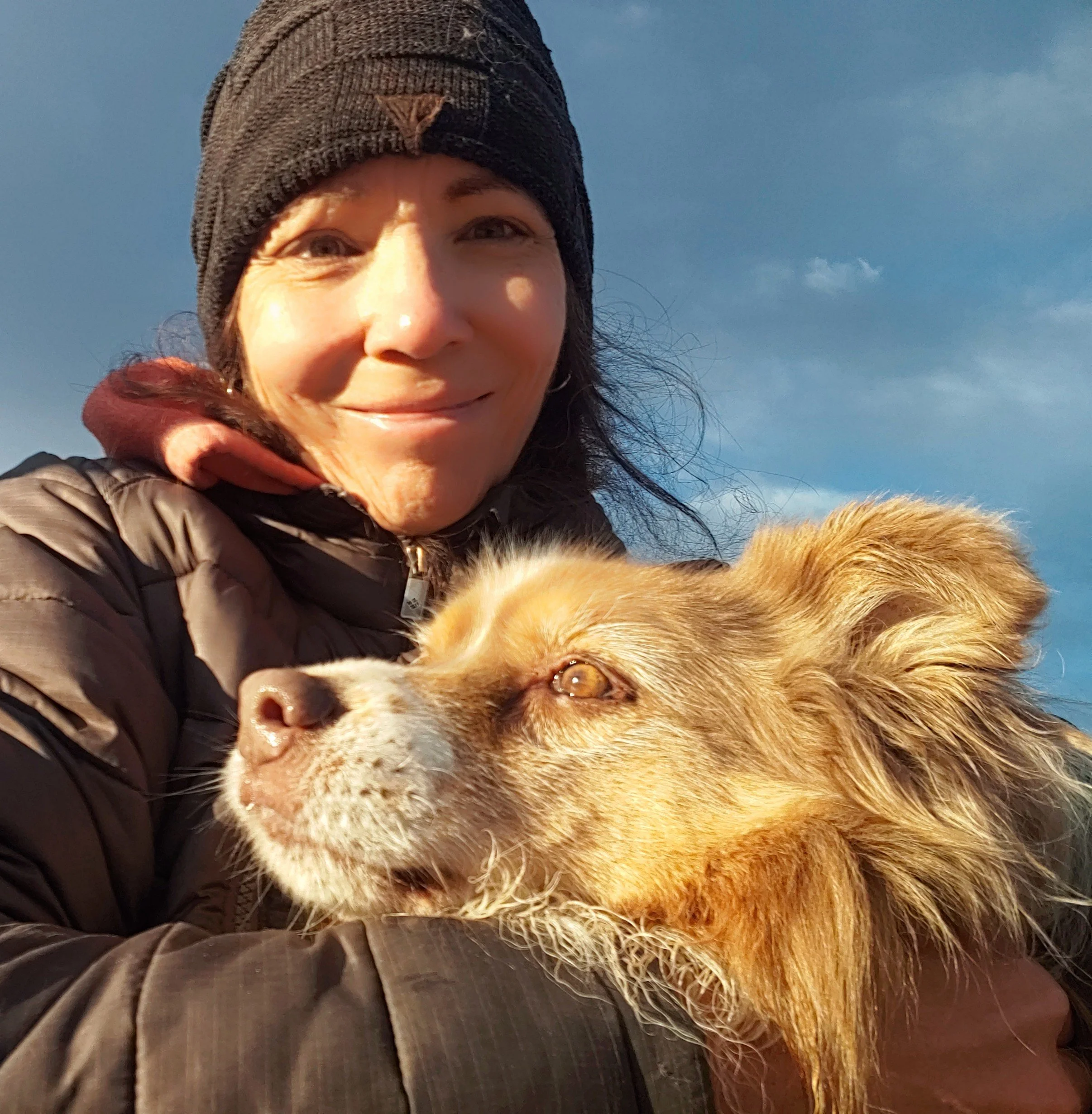
CMarie Fuhrman is a multi-genre writer whose work is inspired by the West. She is the author of Salmon Weather: Writing from the Land of No Return, the poetry chapbook Camped Beneath the Dam, as well as the co-editor of two significant anthologies, Cascadia Field Guide: Art, Ecology, and Poetry and Native Voices: Indigenous Poetry, Craft, and Conversations. She has poetry and nonfiction published or forthcoming in a variety of publications, including Terrain.org, Emergence Magazine, Alta Magazine, Northwest Review, Yellow Medicine Review, Poetry Northwest, Big Sky Journal, and various anthologies. CMarie is the director of the Elk River Writers Workshop and an award-winning columnist for The Inlander. She is the Associate Director of Western Colorado University's Graduate Program in Creative Writing, and founder of Confluence Writing Community. CMarie is the host of Terra Firma, a Colorado Public Radio program. She is a former Idaho Writer in Residence and lives in the Salmon River Mountains of Idaho where she spends her summers as a part-time fire lookout.
Artwork: “Meet Me Here, You’ll Know the Spot” by Daniel Lurie
Digital