Corrie Williamson
Autumn Epithalamium
Even to say it, a hum on the lips. October
brings first snow on the day you marry.
Magpies grawk in the cottonwood leaves
and there is just this: gold crackle, indigo
and cerulean wings, light-laced and flashing.
Frosted petrichor and moon at perigee.
The knuckles of the beloved. Me remembering
the story of how you worked so hard
to grow strawberries on the prairie, and then,
when the porcupines came, let them eat each one.
Plain Song
A rusted plow blade in the field
appears to me a gold and russet bird
breaking the earth to land.
Ovid and the Sagebrush Sea
We need them, of course, the sparrow and the spider,
crow and coyote. My friend says that in his way,
as long as someone is alive who remembers a story —
its sinewy length, the knots bright as silverskin strung
along it that remind you how to live — then those
who hear that story are bound by it. The first cottonwood
buds emerge like drops of blood pinched from a fingertip,
then as a ruddy talon; next the green riot, airy cloudfall
of seed, autumn’s rivers of gold, winter’s rattle.
Ovid’s last tricks are these swaths of black plastic torn
from the round backs of hay bales that catch in roadside
barbwire and become, in the sculpting insistence of wind,
wolf and raven and bear and something stranger, inky shifter,
sign of I don't know what, metamorphic garbage god
of these great plains.
April, Grasslands
All night the coyotes raise their orgiastic choral,
geese land by moonlight on the freshly unfrozen
reservoir, and an owl says the time for love is now —
this night this cottonwood outside my window. All
the next day I walk the prairie, argent blue light thick
in the sage at sunup, remembering that light, in theory,
is a tangible thing, is a particle that scatters like scent,
like down or seed or dew. All afternoon I think
about the Siberian Ice Maiden, who we know,
astonishingly, was buried this time of year in the 5th
century BC, who went to her barrow tomb
on the Ukok Plateau in a larch log coffin, alongside
horses and headdresses, yellow silk and marten-fur
leggings. A tomb that leaked enough to let
a little water in, that sealed and held her beneath
the permafrost, her body embalmed with grass,
and that tattoo — the curling deer on her shoulder,
its hooves like scythes lifted above its own back,
antlers becoming blossoms. Remember, one winter
not even twenty years ago, snow fell so thick here
the pronghorn, on their long migrations, came down
from above the Medicine Line by the thousands
and died by the thousands, their good bitter sage
buried deep below the snow, their bodies crushed
by train cars as they sheltered on the tracks, drowned
trying to cross back over the reservoir’s cold thaw.
Forget the trains and the Missouri’s great false-earth dam,
and the Ice Maiden’s homeland looked not unlike this
one: pregnant does breaking across spring grass,
the horned larks that wheel now in the evening wind.
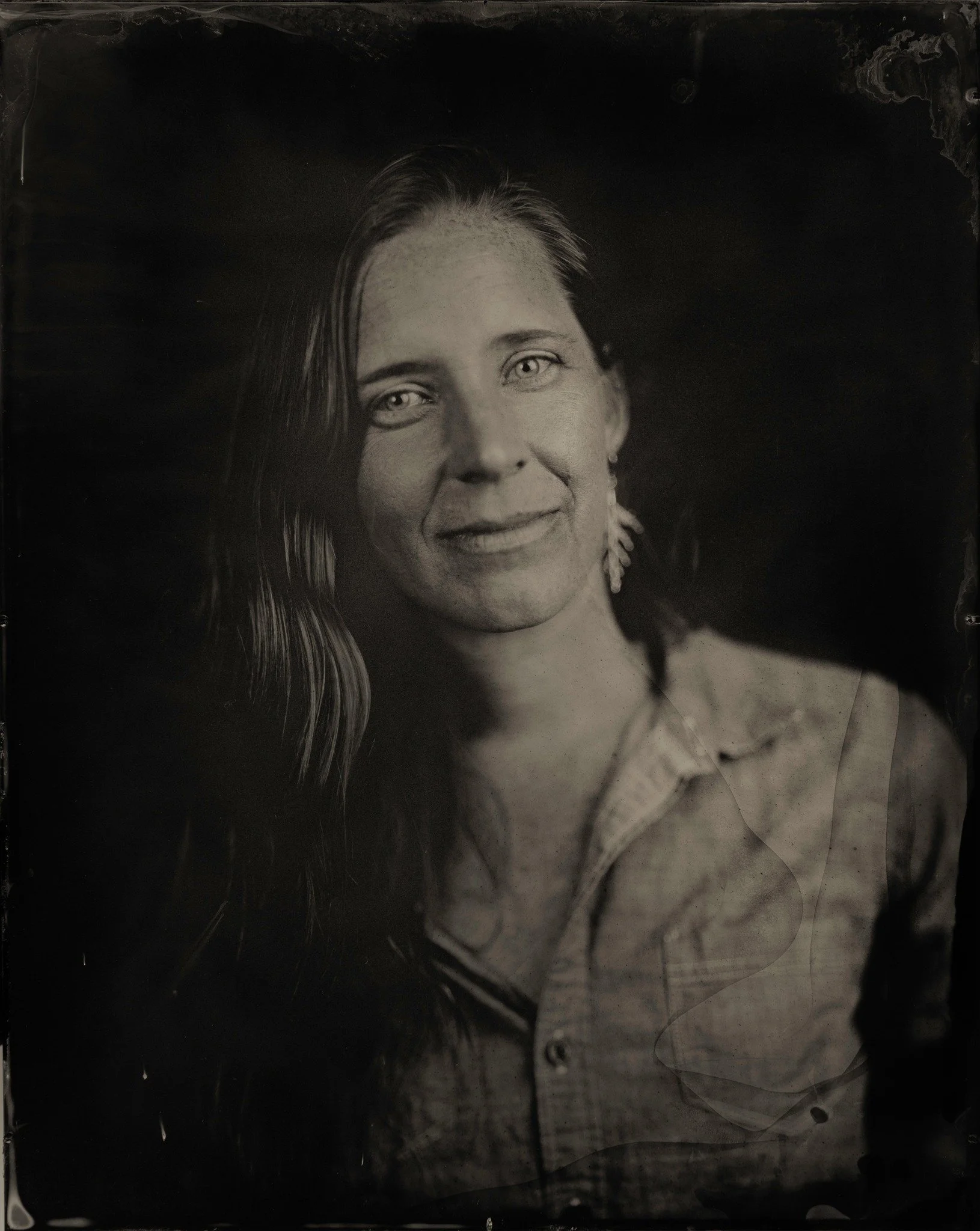
Corrie Williamson is the author of three books of poetry, most recently Your Mother's Bear Gun (River River Books, 2025). Her other collections include The River Where You Forgot My Name (SIU Press 2019), a Montana Book Award Finalist, and Sweet Husk, winner of the 2014 Perugia Press Prize. She is also co-editor of the forthcoming Rocky Mountains Literary Field Guide, out in 2027 from Mountaineers Books. Her work has appeared in venues such as The Kenyon Review, The Southern Review, Ecotone, AGNI, and many others, as well as anthologies such as Attached to the Living World, The Nature of Our Times, and Cascadia Field Guide. She was the 2020 recipient of the Margery Boyden Wilderness Writing Residency, and spent over seven months living off-grid along the Rogue River in southwest Oregon. She lives in Montana. Find her at corriewilliamson.com.
Artwork: “Crush” by Daniel Lurie
Digital