Everywhere Velvet, Everywhere Elegy: A Conversation with Alexandra Teague on Stacy Isenbarger’s Work
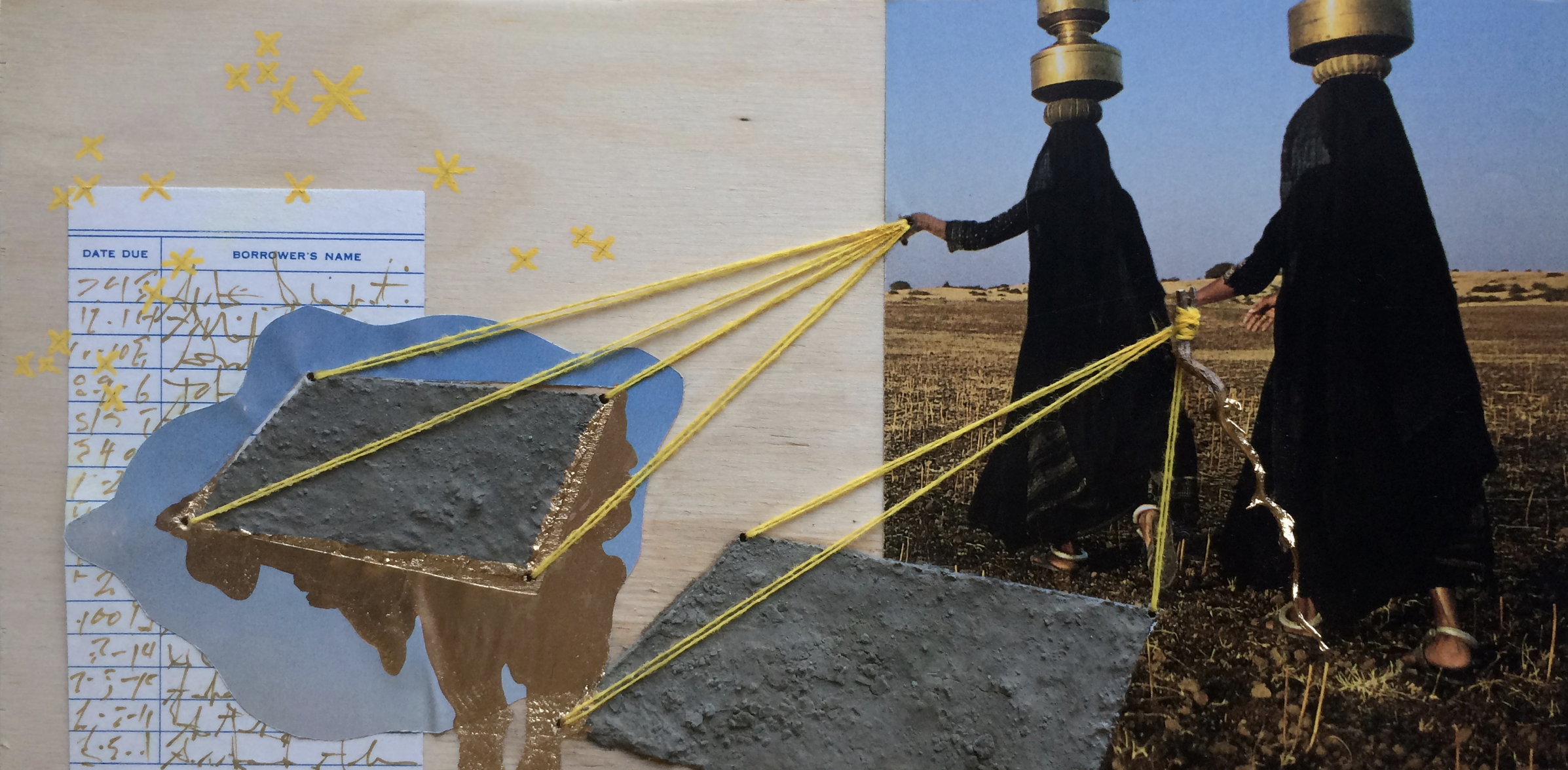
The visionary artist and beloved professor Stacy Isenbarger passed away on August 4, 2025 from complications of aplastic anemia, a rare blood disorder, at the age of 42. We (Crystal and Daniel) were lucky enough to cross paths with her while studying at the University of Idaho, where Stacy taught in the Department of Art and Design for 14 years and inspired countless students.
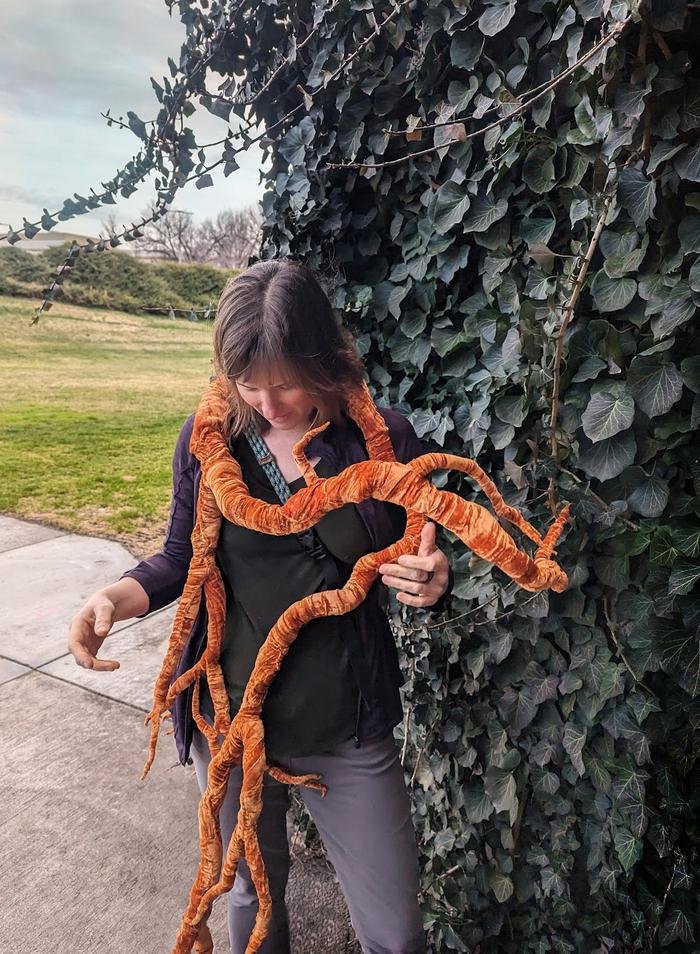
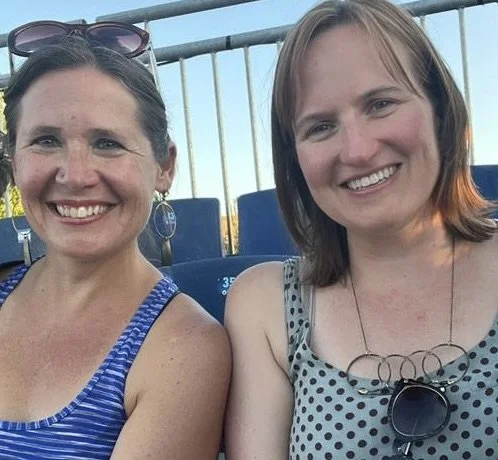
OS: Can you tell us the story of how you met Stacy Isenbarger? Or, perhaps, the first moment you knew that you would grow to be close friends?
AT: Stacy and I met in line for lunch at the new faculty orientation at University of Idaho in August 2011. The presenter had just been talking about the importance of interdisciplinary collaboration, so everyone was chatting and kidding around about finding collaborators. Stacy introduced herself and said she was a visual artist, and I said, “Oh, I love visual art and write a lot about it. I’m a poet.” And she said something like, “Oh, I love poetry, and work with language a lot in my art.” And that was seriously the start of fourteen years of collaborating and talking about our arts. I’ve probably never had a clearer, more instant creative connection with anyone.
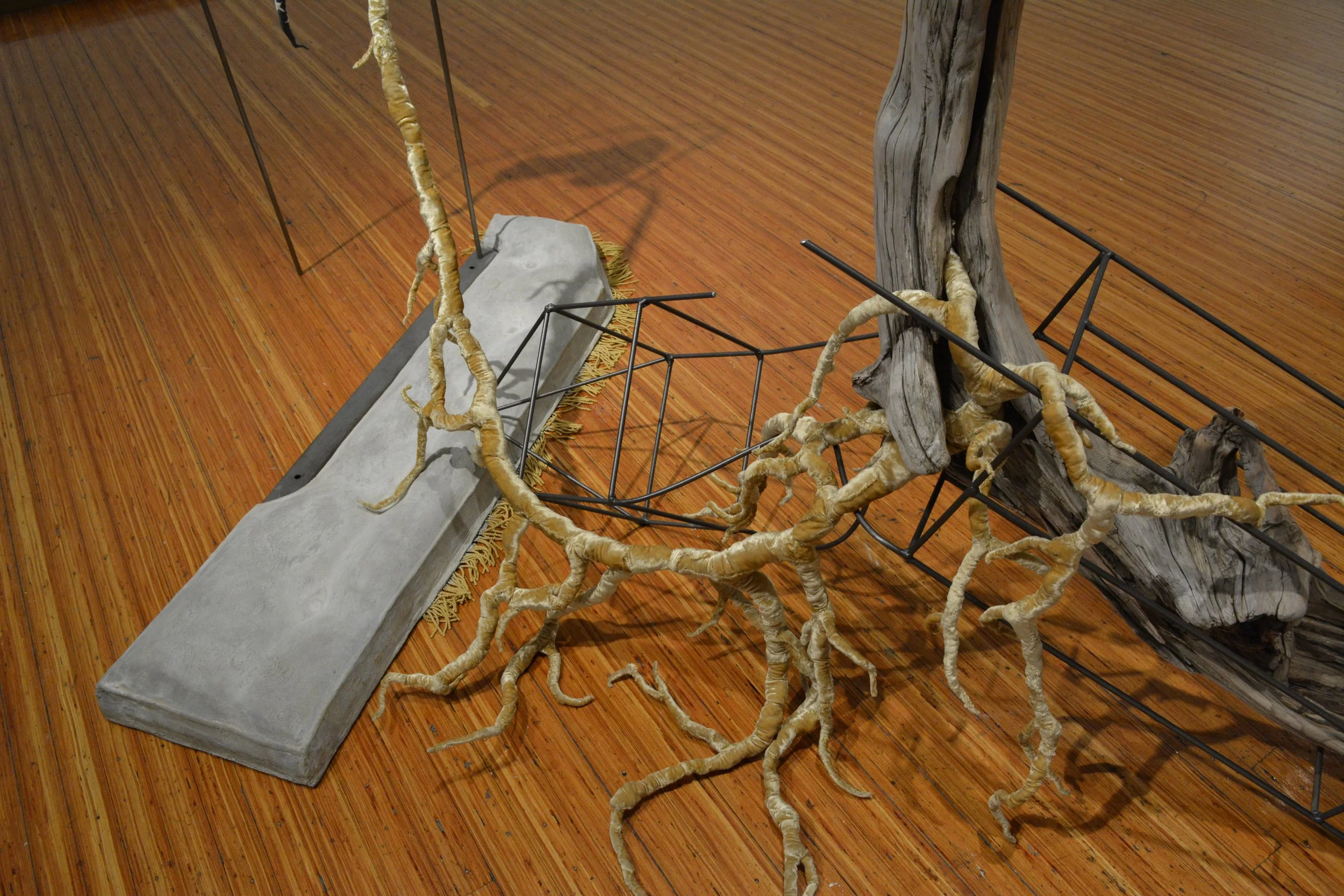
Head Off & Split, 2021
Over the years, we shared passages we were reading, recommended books and exhibitions to one another, talked about our works in progress, talked about teaching, ranted about work frustrations, went to museums, readings, music, and art openings together, and talked about the challenges and beauties of the creative process itself.
She often titled her work after poetry, including this sculpture (shown in detail) Head Off & Split, named for a Nikky Finney book. On her website, she captions this piece with two quotes from Finney, including “Arching herself over a river of cloth she feels for her bias, but doesn’t cut. . .”
Before her last exhibit, Inheritances, a one-woman show at Washington State University, I came to her studio so she could talk through how she was responding to various quotes that had inspired her making. She was, as often, trying to figure out how overtly to use language to frame the exhibit, what words to include, and what to leave in the background of her process.
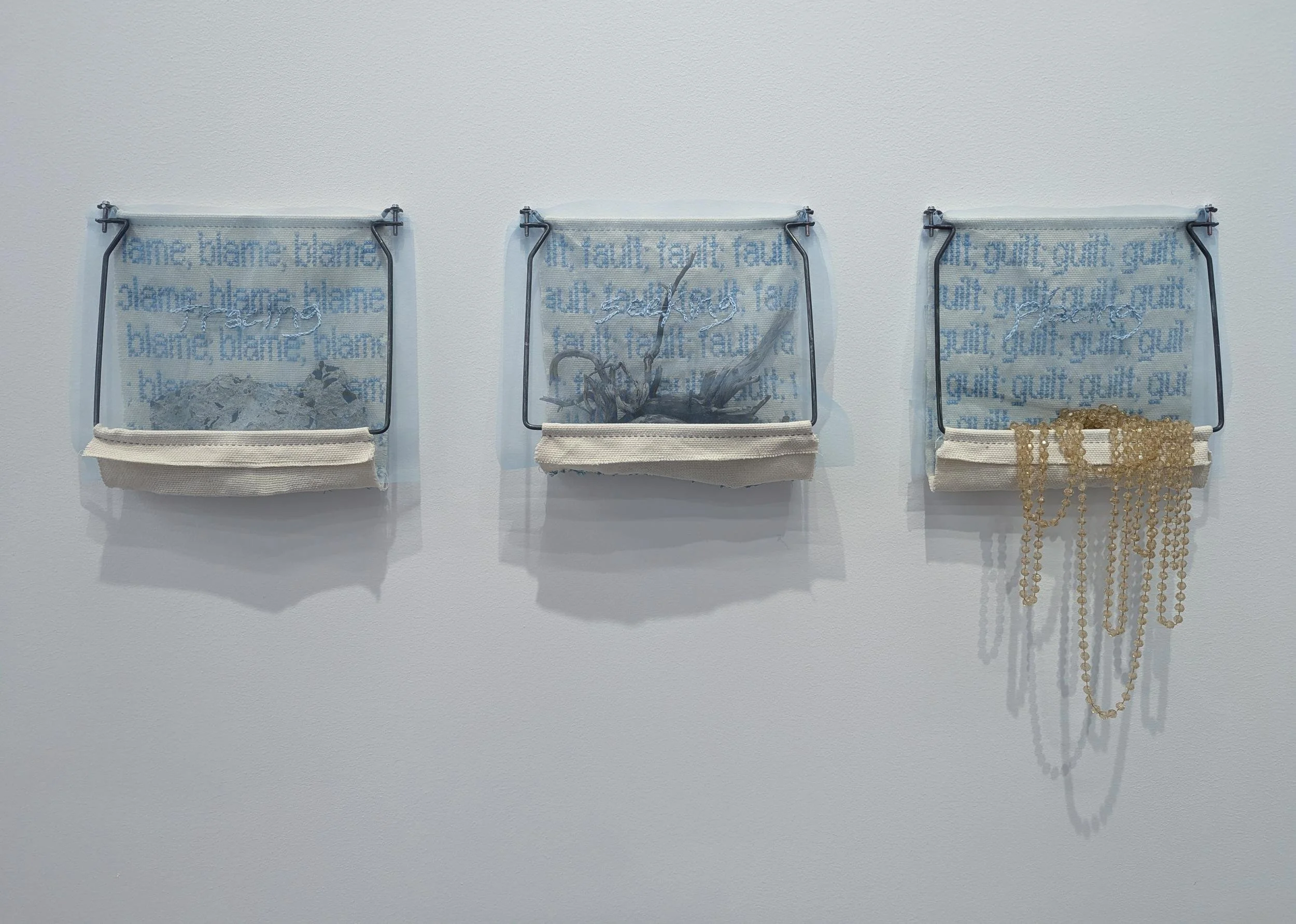
Diffused Retrievals, 2025
OS: This one is a tough question, but we’d love to know which of Stacy’s works or exhibitions you’re most drawn to, and if Stacy had a particular affinity for certain projects?
AT: I feel a particular connection to Inheritances since it was her final exhibit, and she gave the opening talk only twenty-four hours before she first went into the hospital for what ended up being diagnosed as aplastic anemia. Talking about her work that day, she still appeared completely healthy and full of her crackling energy and brilliance, and I still can’t reconcile that she wasn’t ever well enough to take down that show, much less make all the work that should have come next. I also have a strong affinity for the work that came out of our BASK collaborations, including the Hanging Directives. And I love her Shed series. But for me perhaps the single most brilliant synthesis of her political and social concerns, her desire to open other dialogues and questions, and her obsession (which I share) with velvet, and in her case, making velvet roots, is “Porch Song” (2022).
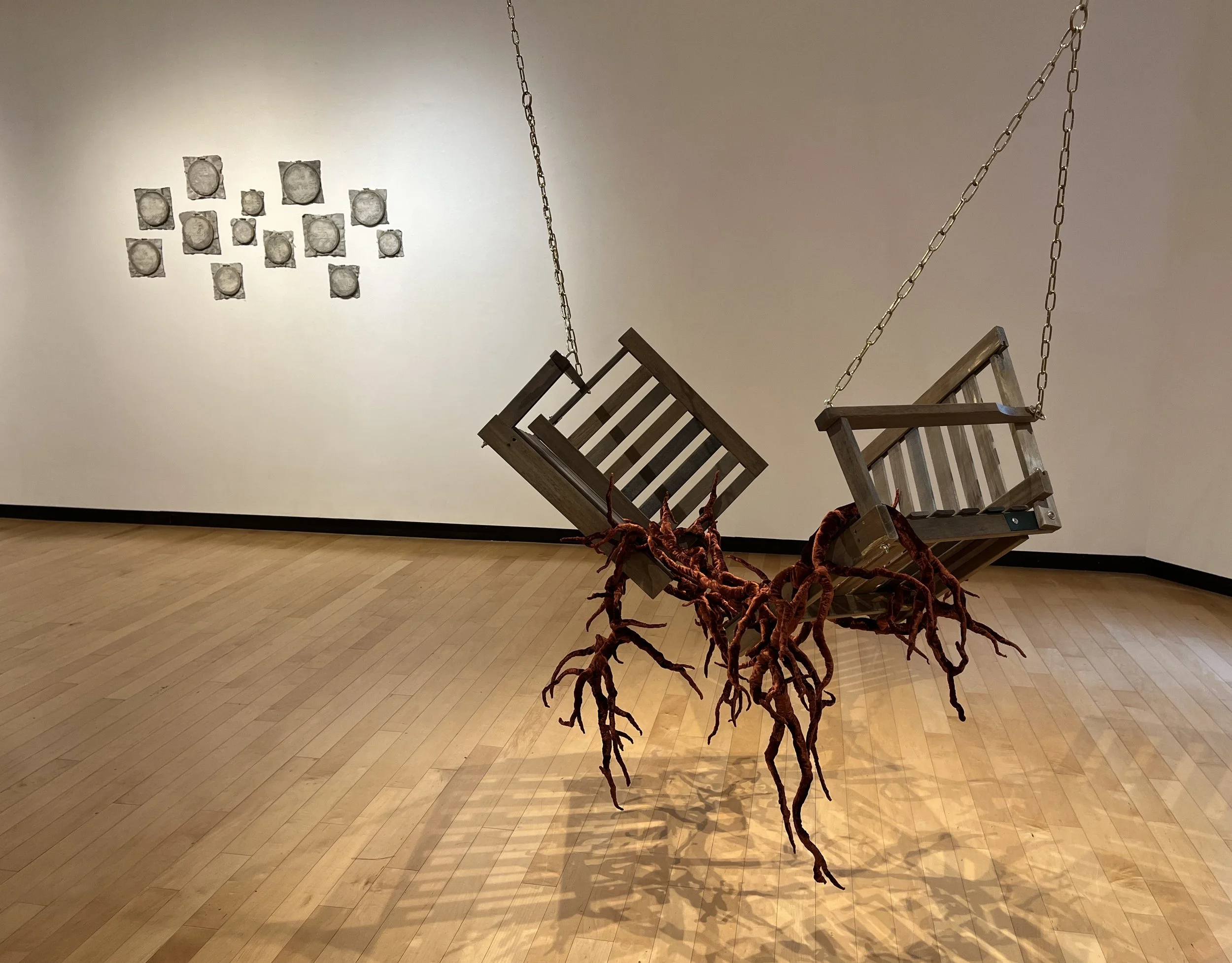
Porch Song, 2022
She and I both grew up in the South, where people spend a lot of time sitting on porch swings and talking, and she created a swing that’s broken by this country’s deep divisions but that also offers a complex vision of the roots and connections still binding us. I think it’s an absolutely stunning metaphor and image. As with so many of her pieces, if I came upon this in a museum without knowing Stacy, I’d be blown way and telling everyone about it.
On her website, she captions this piece with a quote by another of her favorite writers (who I also love), Ali Smith: “All across the country, the country split in pieces. All across the country, the countries cut adrift. [. . . ] A fence here, a wall there, a line drawn here [. . .] here / there.”
OS: What was it like to collaborate with Stacy on projects like Broadsided? What other collaborations did you do together?
AT: I was already an editor for Broadsided when we met, and Stacy became one of the Broadsided artists soon after; as she writes eloquently in the introduction to the Broadsided anthology, she loved beginning with language as a prompt rather than facing a blank page (she was in that and all ways extroverted and a believer in conversations). We’d often talk about the poems she was responding to, and I loved seeing what images and sounds in the poem most resonated for her and what she brought into visual conversation.
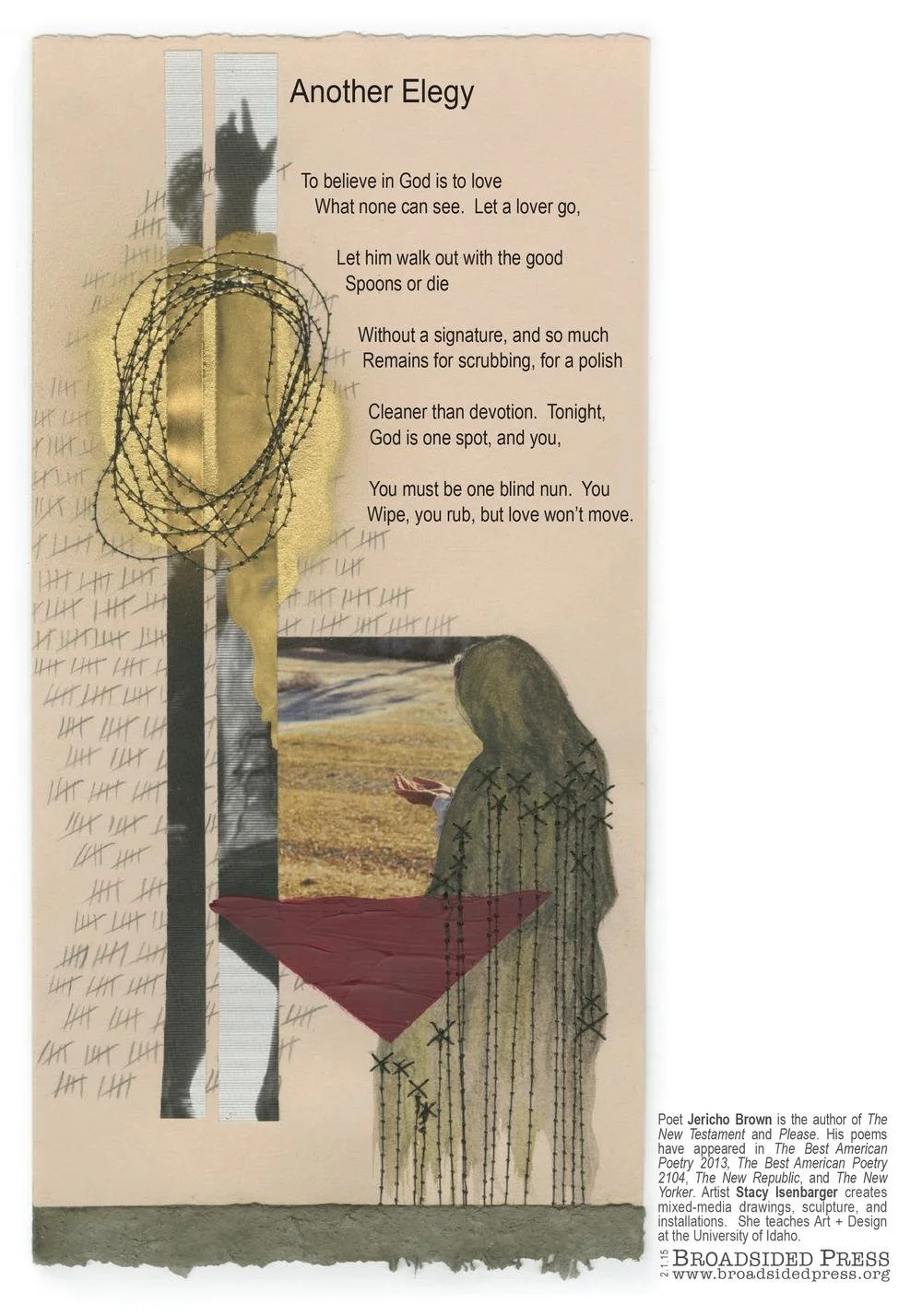
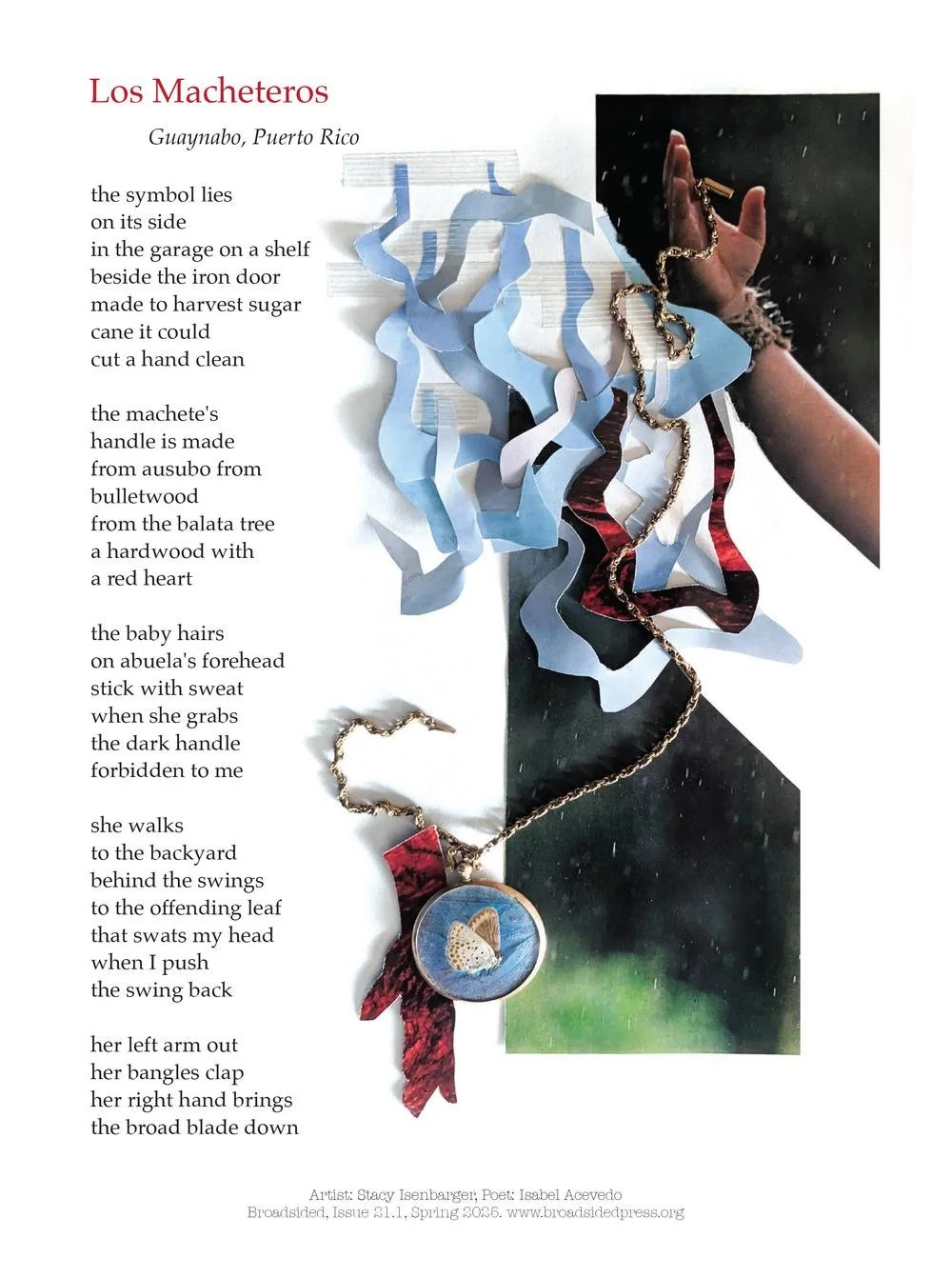
Our most pivotal early collaboration, though, was the BASK Collective, an interdisciplinary arts collective we founded in 2013 with UI dance professor and dancer/ choreographer Belle Baggs and UI piano professor and pianist Kristin Elgersma. Thanks to a UI Arts grant, we were able to facilitate a series of community and university workshops that culminated in an interdisciplinary performance, with a commissioned new work by the composer Eve Beglarian.
As Stacy writes on her website, “Play Like a Girl was a collaborative music/dance/visual art/poetry project; the primary goal of which was to create a space to explore issues for women (and allies) in the arts— focusing on social projections on women, the ways women artists project themselves, and these projections’ broader social relevance. This project began with the usually denigrating phrase “play like a girl,” and sought to explore and reclaim it.”
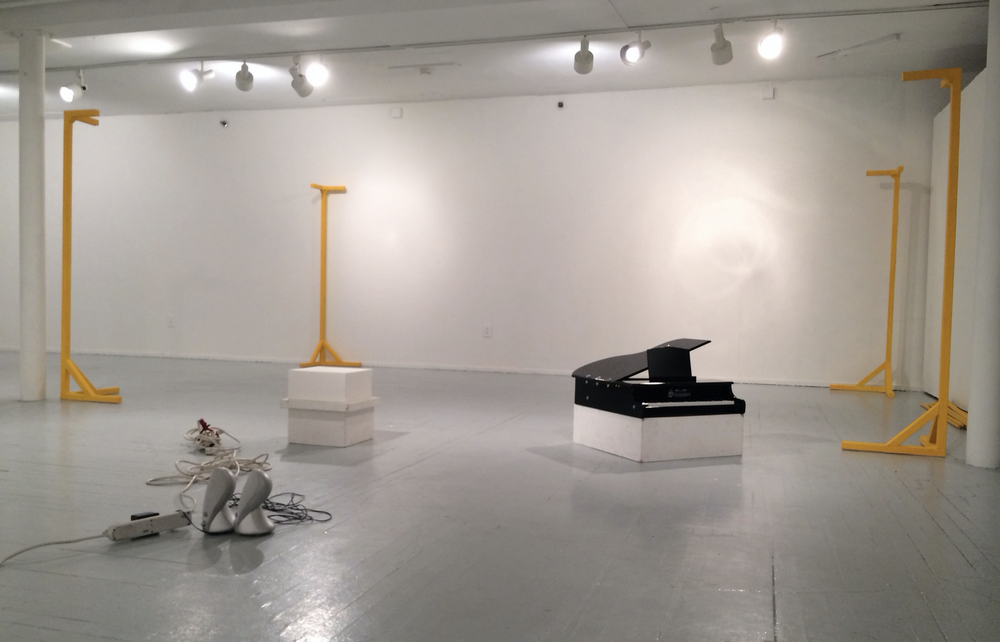
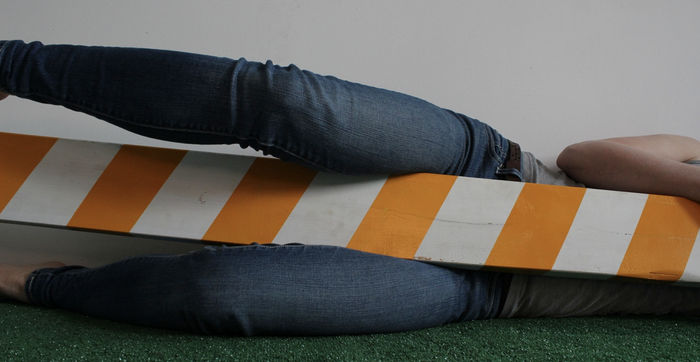
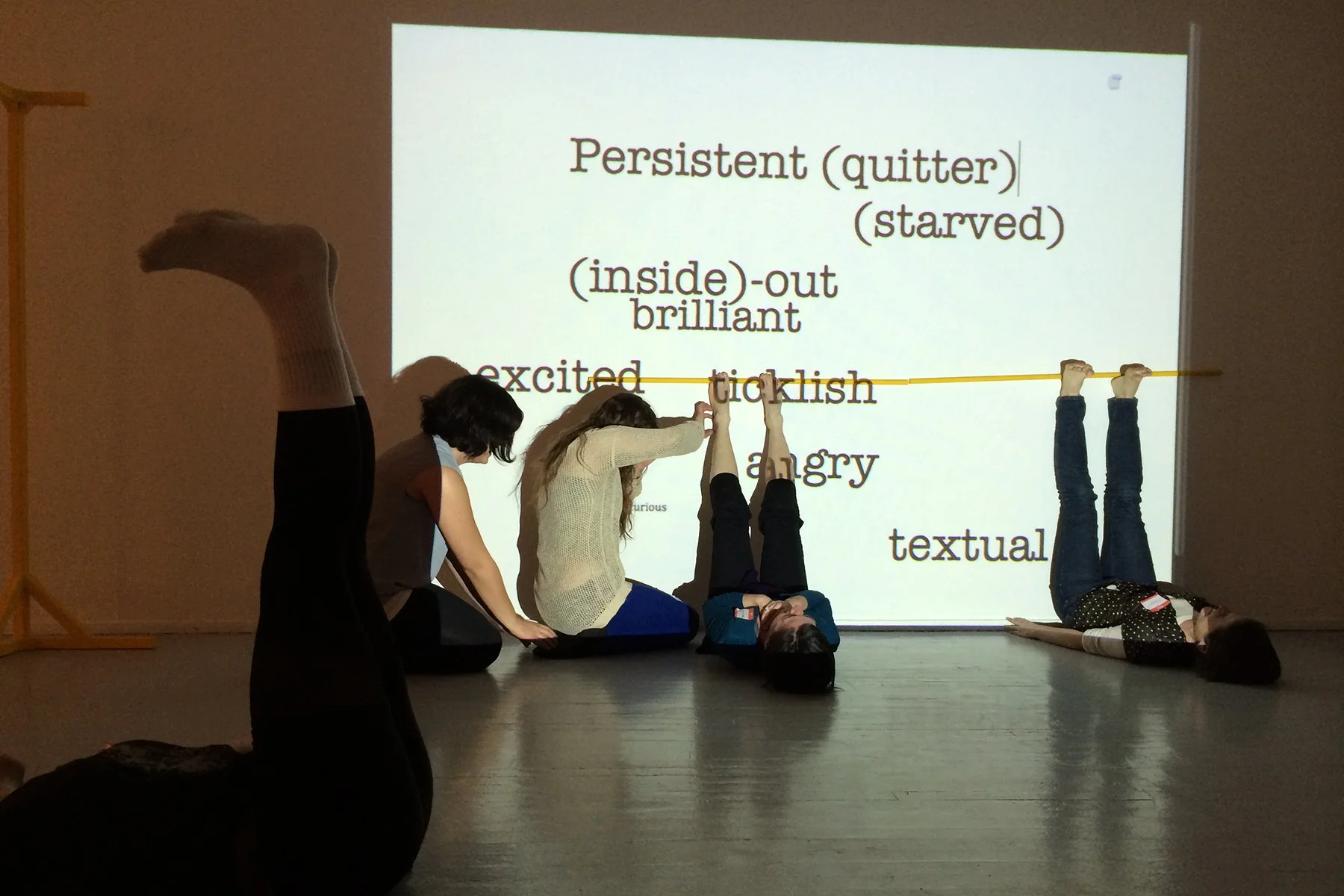
Collaborating was great fun but also challenging and vulnerable since often we’d all realize that we were speaking slightly different artistic languages. At one point, we decided to directly explore the ways that lines mean something different in poetry, dance, music, and visual art, and of course the lines that get drawn culturally in terms of gender expectations. How could we bring these different lines into conversation? How could we—as Stacy did—straddle the caution lines in place in our own minds and artistic practices?
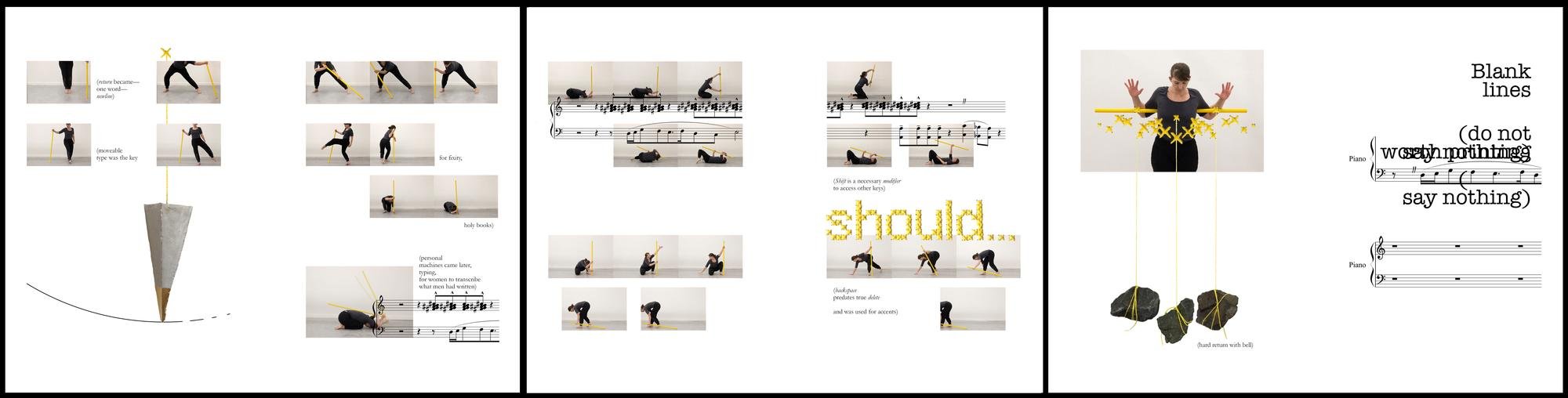
(Visual essay drawing on our collaboration, designed by Stacy, and published in Alaska Quarterly Review)
Our best realizations often came out of uncertainty and play and being willing to try strange ideas and see where they led; I found collaboration to be incredibly vulnerable in good ways. My third book of poetry, Or What We’ll Call Desire, grew directly out of the more overtly feminist writing that I did for BASK; overcoming my fears of didacticism and figuring out voices that felt authentic to me eventually led to that book’s poems about the artists’ model Audrey Munson and poems in the voice of the Russian fairytale witch Baba Yaga. Stacy and I were in frequent conversation about themes of sculpture and allegory and feminism as I worked on that book.
OS: In “Edge Poem (Everywhere Velvet),” you write “I’m trying, as I will always have to / now, to see the world as you did—to imagine what it is to hold a rock / and see its waiting skins of velvet.” What influence has your friendship with Stacy – as a visual artist and as a person – had on your writing practice?
AT: Stacy and I were similarly always asking questions about our work and the world around us. Over the years, we repeatedly had the most amazing experience in which we’d be busy with work and not talk for a while, and then we’d get together or talk on the phone and discover that we were working on projects that had overlapping themes in some way. And then we’d have an excited, geeky, fast-paced conversation about all these ideas we were having, which would inevitably lead me to see something totally different (like the toes of the artists’ model over the edge of the pedestal). And she was a great, great cheerleader of my writing, and of so many artists, musicians, and writers in our community and across the country. Talking to her was both confirming and challenging, in the best ways.
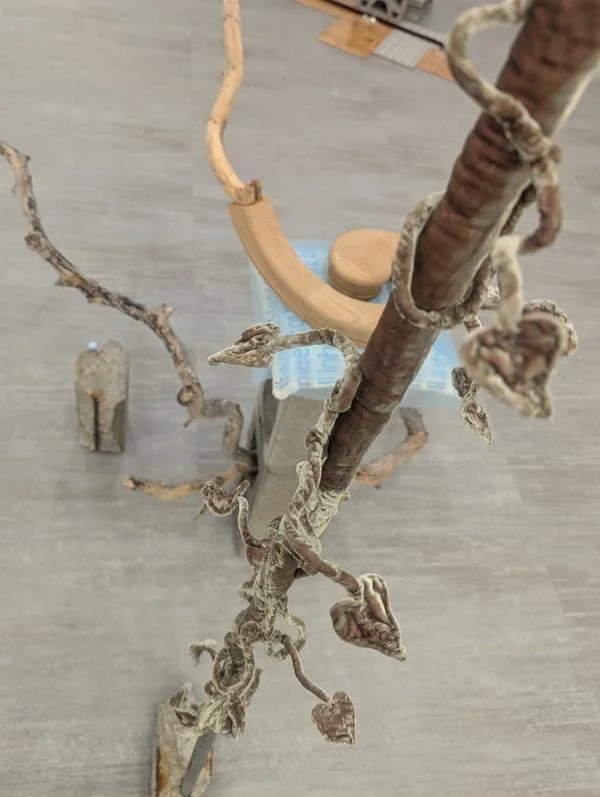
“Upward Mobility (Beanstalk)”
What I really want to say is, I was lucky enough to be close friends with, and inspired by, the artist who made this velvet beanstalk, which reaches to the ceiling and is called “Upward Mobility (Beanstalk),” like many of her works, combining two titles because she wanted to say so much. She had so much more to say. She could painstakingly wrap and sew the stalk and velvet leaves to make a piece that is at once so magical and metaphoric and political and beautiful. . .; her influence was like that: I’d have to keep listing adjectives and twining the stalk on and on to the ceiling and beyond, like Jack’s magic beanstalk, on into the clouds, to answer this.
OS: Looking at Stacy’s art is a surreal sensory experience. Organic material grows on top of inorganic textures – moss, branches, fabric, cement, and (of course) velvet. While the materials typically wouldn’t belong together, they feel inseparable in Stacy’s sculptures. How did the particular textures of Stacy’s work weave their way into these three poems and into your everyday life?
AT: in my poems, I think a lot about composition of scenes and sounds and interactions among seemingly disparate parts of the world. Stacy always teased me about how much I could connect in a poem, but of course I could say the exact same about her. In her Shed Series, for instance, she was exploring questions of what’s domestic and what’s natural, what’s inside and out, what’s “feminine” or not. . . She very much thought like a poet, using language and physical objects and textures, as she does here in “Unfurl (Rosie’s Sofa).”
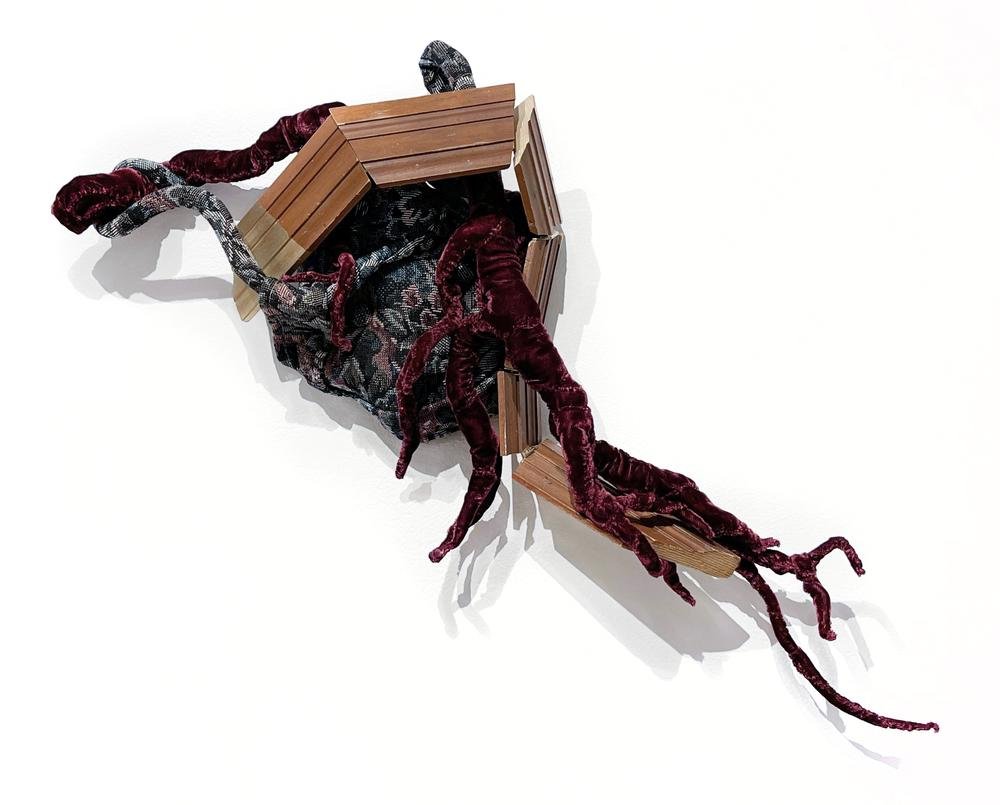
“Unfurl (Rosie’s Sofa)”
My poems reflect our shared fascination with how to weave elements together: such as moving from talking about work to joking about a song to imagining an entire scene that reimagines the difficult world into something that still contains the pain but is also other. When Stacy and her partner, the writer Jacob Wilson, came to visit my husband and me in Madrid in 2022, I had a quintessential version of the experience I always had with Stacy: we walked down streets I’d been walking every day, and I saw so much that I never would have noticed if she weren’t there seeing it: whether a street-art mural or the light on the wall of a building or something that reminded her of a song from Moulin Rouge, which she began to sing. So I’d say that the surprising connections she made—such as taking what should be “domestic” wood and what’s wild or “natural” and putting them in conversation, as she does here—is very akin to my own aesthetic, but also not something I’d know to imagine if she hadn’t made these works. Likewise, I’ve loved the soft-rough, slightly archaic elegance of velvet since I was a child and would cover more furniture in my house with it if I could afford to. But without Stacy, I wouldn’t have ever thought of a velvet rock or tree branch.
OS: In “Words Lost/Misplaced/Somewhere in the Studio,” you write “Of course I have to borrow from the art you are not making / with the hands you do not have now…” How do you conceptualize this borrowing from loved ones in poetry? Is it integral to writing an elegy?
AT: One of the quotes that Stacy was working with in the background of Inheritances was from “Fable of the Barn” by Ann Lauterbach: “If I look away I will find some words that don’t belong to me, stolen, borrowed, or apprehended.” So that poem is in direct response to Stacy’s fascination with this idea of borrowing. My poem is literally borrowing the idea of borrowing, and continuing, in my own way, the work she wasn’t able to.
And yes, I like the idea of an elegy as a borrowing, which I think can work in a number of ways. I think of Gwendolyn Brooks’ astounding “the rites for Cousin Vit,” which borrows the power of sonic momentum and the compression of the sonnet to enact the vivacity of Cousin Vit, which was/is too much for death to hold. I think at best in an elegy we’re trying to borrow some essential aspect of the person we’re elegizing, and if we do that well enough, they’re still in some way present.
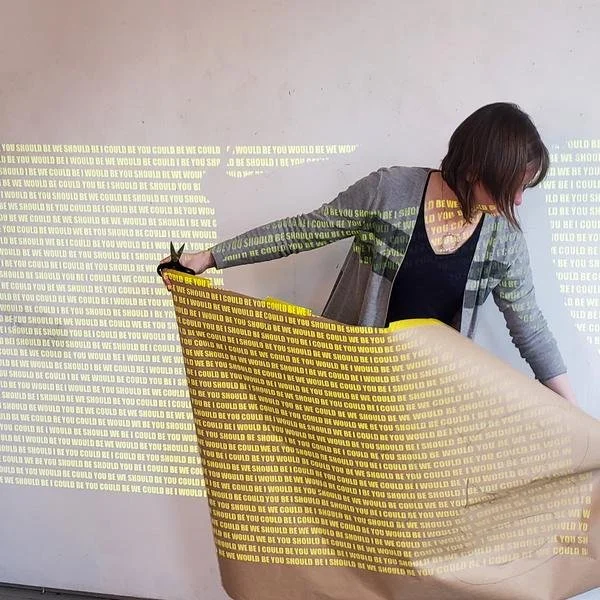
We want to give a special thanks to Stacy Isenbarger’s partner, Jacob Wilson, for permission to feature her artwork in this interview.
To see more of Stacy’s exhibitions and collaborations, visit her website at stacyisenbarger.com.
In honor of Stacy’s memory, Outskirts will be donating $50 to the Stacy Isenbarger Memorial Art Scholarship Endowment which supports art students at the University of Idaho.
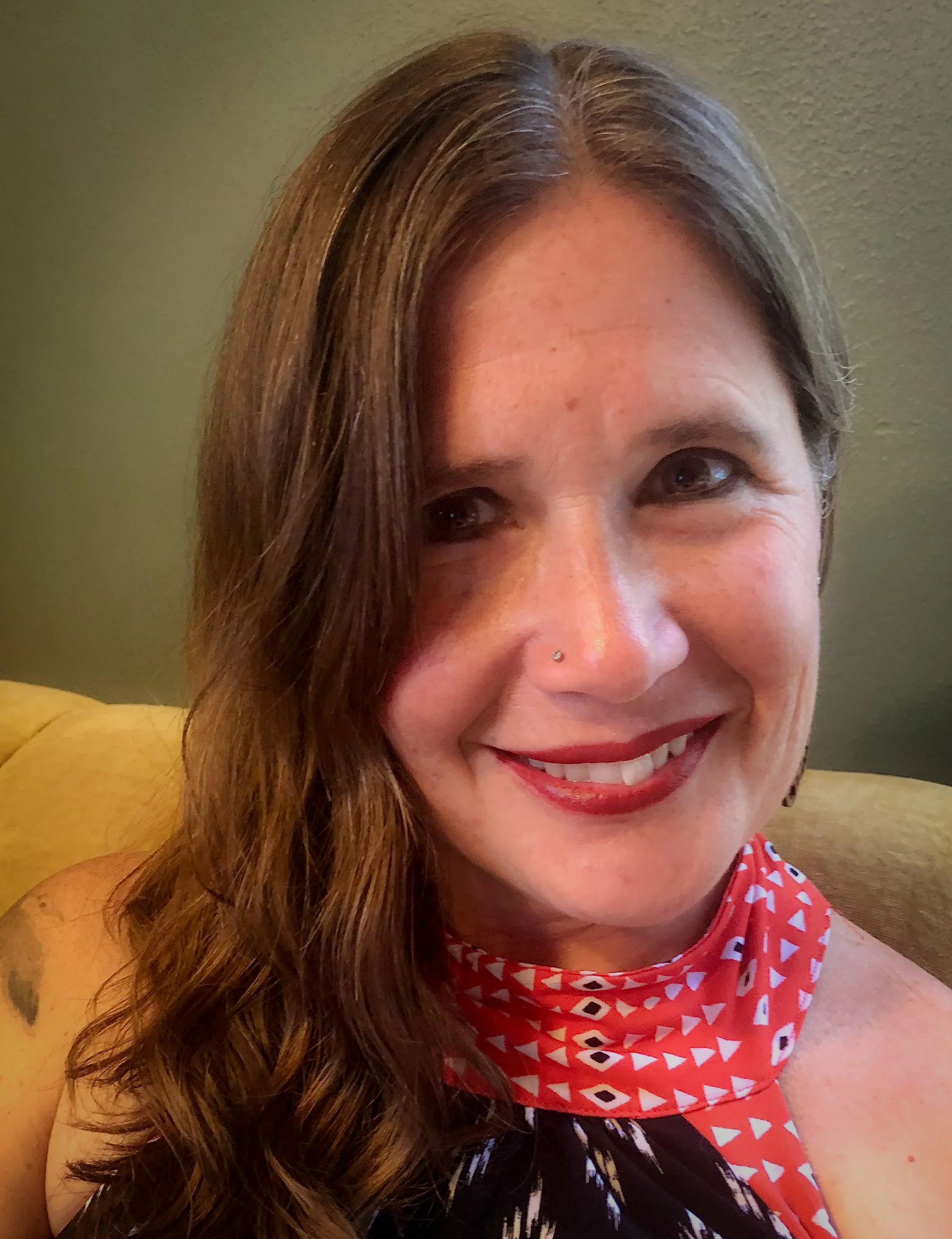
Alexandra Teague is the author of the poetry collection [ominous music intensifying] (Persea 2024) and Spinning Tea Cups: A Mythical American Memoir (Oregon State University Press 2023). She is previously the author of three books of poetry and a novel, as well as co-editor of Bullets into Bells: Poets & Citizens Respond to Gun Violence. A former recipient of fellowships from Civitella Ranieri and the NEA, and a 2026 Idaho Commission on the Arts Literature Fellow, she is a professor of creative writing and chair of English at University of Idaho.
Artwork: “Untitled” by Stacy Isenbarger
Collage