Keegan Lawler
Tina Bar
Silas shoved the stick of my father’s truck back towards my crotch. A space had opened on the highway and the truck lurched forward, but he had hit the wrong gear, and now it struggled to move. The carburetor sounded like it was drowning. I heard him whisper, c’mon, c’mon, c’mon, as the truck rolled towards a stop on the highway.
He shifted his shoulders back and let a long breath out once the engine kicked in. We lurched forward, then smoothed out. Silas looked over and smirked as the speakers picked up halfway through “Flying High Again.” He sung in his overly nasal Ozzy impression: mommas gonna worry, I’ve been a baddd baddd boyyy. The truck hummed and rattled. The passenger side seatbelt, no longer working, flapped loosely around.
Silas and I had been friends for years. Our only friends, if we were being honest, which we never were. Young men shooting glances off the side of the vulnerability. We were just starting the journey at that point. Heading south from our homes in Longview towards Vancouver. Eventually, we’d peel off towards the 501, and follow that to Frenchman’s Bar where we’d begin.
Everyone knew the story: a mysterious man buys a one-way ticket from Portland to Seattle, threatens to bomb the plane, demands two hundred thousand dollars in cash to not do so, and, after getting it, jumps off the plane into the forest below, never to be found. It made news when we were in elementary school when the eight-year-old found fifty-eight hundred dollars in the sand with the matching serial numbers of the ransom money. Tina Bar, and all the other places associated with the hijacking, were all within hours of our homes. Southwestern Washington State wasn’t famous for much, but we had that.
Everyone knew the story, but only we were obsessed. We checked out D.B. Cooper: Dead or Alive? from the library so many times that the librarian would tell us whether or not it had been checked out when we walked in the door. Silas got Norjak for his birthday when it came out and read it over a weekend. I read it the following week and we spent the next weekend compiling facts on notebook paper and pinning them to the walls of his bedroom. We made hierarchies to establish a timeline. We organized facts as supporting evidence under the possible theories behind Cooper’s disappearance.
Nobody asked about our obsession, why we spent long hours together cultivating and maturing it as we did, the childish dreams of finding the rest of money now set aside for the real work. Nobody asked why we scoffed and rolled our eyes when businesses did “Cooper Days” and sold shirts with his FBI sketch on them. We didn’t talk about it either. Entire conversations passing between us through invisible wires, gestures and faces enough to let our minds fill in the empty spaces, our obsession the structure to project our lives onto, to give shape to the shapeless future glaring down at us.
It had been sixteen years, nearly our entire lives, since his 1971 jump from the Boeing 727 into the forest below. Hundreds of people had looked: combed through wilderness and riverbeds, turned up tons of sediment from the Columbia River. The summer after we graduated, we told ourselves, was our turn.
We parked at the far end of the parking lot for Frenchman’s Bar and found a wooden table to set up at. I rolled out old maps from Silas’ Mom while he looked for rocks to hold down the edges. Washington State, Vancouver/Portland Metro, Clark County. Silas started to transfer the maps from the books we’d brought to the larger maps, their edges pinned and fluttering under rocks caked in the damp soil. In the parking lots, crows ripped a greasy bag and scattered fries along the asphalt.
We reviewed the facts we knew better than we knew our parent’s birthdays: the projected drop zone from the FBI, the regions searched in the original operation, and, of course, the money found seven years ago. I scratched out what we knew about the jump in blue pen along the margins: the weather, the altitude, two parachutes.
Beyond that, Silas and I disagreed. Silas was convinced Cooper was ex-military. He thought he had known what he was doing when he jumped, and, while perhaps landing harshly in the limbs of a tree, he had survived. He hadn’t known the serial numbers of the bank notes were recorded previously, but when he got into town, he heard as such from the news and had left caches to retrieve later, once the heat was off him. Maybe until he could go to Mexico City. Maybe until he could find some place to exchange the bills unnoticed.
I thought Cooper was a Boeing employee, perhaps laid-off or fired, which explained the “grudge” he told the flight attendants about. How else would he know the city of Tacoma so well? How would he have known that a 727 had an aft staircase that could be lowered in-flight?
The truth was there was much neither of us could explain. Where he got the dynamite. Why he chose the two parachutes from the lineup of four he was offered. Whether or not he was one of the many suspects that had already been questioned. But those were questions we were able to let go.
There were things to find and in the early morning hours, beating sleep off with heavy eyelids, we dreamed big: parachute cords, torn bits of a black suit, a pair of smashed, black sunglasses. There was always the $25,000 reward, but that felt too ambitious to say aloud. We let it instead simmer in the same place in our mind we left all things we would never say.
The first cases were reported a year after the Tina Bar incident. It was in cities first: Los Angeles, New York, San Francisco. The first Portland and Seattle cases swarmed the news around us. Every week it seemed there was an update to the numbers, an update on what the disease was, what it did, how you could get it. People grasping at straws.
In the dark, ugliness broke out. “Gay Cancer” twisted in the mouths of teenagers to “homo cancer,” “faggot cancer.” By the time they called it HIV/AIDS, the ugliness had taken hold. Pastors called it “God’s Judgement.” People didn’t want to drink from the same water fountains. It took a princess shaking hands with someone living with HIV before anyone else would.
Losing weight was the first sign, so when I was younger, I would clean my plate, then take seconds. I was a growing boy, and I took it like an oath to stay that way.
I worried less the older I got about the numbers on the scale, and more about the life rushing towards me. The future like a skinny, desperate wolf staring down at me from the ridge. A life I couldn’t live against a life I was sure would kill me, and me, holding desperately onto whatever I could before the bloodied teeth came down.
By the afternoon, we settled on a plan. There were going to be three days. The first would be north of Frenchman’s Bar, the second around Tina Bar, the third just north of there. It made sense in our heads to spend most of the time outside the area where the money had been found. In the years since, it had surely been thoroughly combed, but we couldn’t miss a chance to go there ourselves.
We got in the truck and merged onto the interstate, Ozzy’s voice drowning under the road and rattle of the truck. I slipped in a Joy Division cassette. Silas perked up. He tapped along on the steering wheel to the beat, and I caught the edge of a smile.
Silas slid his hand on my leg and squeezed it. The bassline kicked in and we both mouthed the lyrics as Ian Curtis’ voice cut through the metal rattles around us. Curtis’ lyrics were easy to love. His too-short life and tragic end made him easy to obsess over, especially if you were young and unsure if you could make it any further than he did.
We drove back to Vancouver for dinner. We ate tacos over waxy tray papers and talked over the facts. What we needed to do. What we needed to look for. The dreams of what those next few days could do for the following ones. Giddy with energy. Joy. Clear and pulsing between us.
Silas moved to Longview in sixth grade. It was a few months before my father fell, tearing out the shingles from someone’s roof, two stories to the ground below. It was lucky, people told us, how he fell. There was grass and dirt. It wasn’t concrete, gravel, or wood. As if there are good ways to break a body.
After coming home from the hospital, Dad took a residency on the living room couch. Mom and I moved like ghosts around him. He was in pain, then he was angry he couldn’t take care of us like he used to, then he was angry at the worker’s compensation running out. Black-and-white cowboy movies ran on infinite repeat. We got used to eating to the sound of gunfire. I got used to the sound of breaking glass as I tried to do math homework.
Friends I’d had once stopped wanting to come to my house, and Mom started working more, taking the car out to clean houses and take classes from Lower Columbia College. I stopped getting rides to friends’ houses and stopped getting invited over too.
Silas could stand my house. He didn’t mind the way smoke hung curtains in the living room, how Gregory Peck and Henry Fonda spoke more than anyone else in the house did. He was okay even just being in my room. The only place that didn’t feel as doomed as everything else did.
It was that year that the money at Tina Bar was found. Dad took time out watching his cowboy movies to turn on the news and brought us both in to watch the interview. The eight-year-old digging in a sand bar twenty miles away from Vancouver, the serial numbers. We learned shortly after that D.B. Cooper was almost certainly a pseudonym, but it was the only name he gave, so it was what stuck in the culture. That and the FBI sketch of the small, pale man in dark sunglasses and a dark suit, became the objects to hold onto from the case, more than his bizarre conversations with the airline attendant, his bomb threat, and even the limited physical evidence left behind.
The kid who found the money, younger than Silas and me, stumbled into a discovery greater than any amatuer detectives had in the decade since the hijacking. This small truth, an eight-year-old changing the way the world understood some piece of itself, sent us tumbling towards a discovery we were convinced we would find.
We woke up early the first day to Stellar’s Jays chasing and fighting each other in the trees around us. Silas turned on the truck and we held our hands to the heaters. “She’s Lost Control” brought us into the day.
We used stakes and twine to guide us, moved in parallel north-south routes. Back and forth over the same stretch of land. Following your own footsteps off to the side. I stopped every few passes to pull focus back to my eyes. It was easy to stop noticing the differences between one thicket of leaves, blackberry bushes, and wind-torn tree limbs from another. It was my work to care. It had to matter.
Around noon, we ate gas station cheeseburgers and chili cheese fries on the hood of the truck. Grease dripped form our fingers onto the peeling paint. A family pulled up next to us in the parking lot with inflatable tubes and kayaks holding like stranded sailors to the car. One of the parents shot us a dirty look. Silas sneered back. He had that strength—shooting someone’s ugliness back at them. I envied that about him.
I wiped our mess up with the plastic wrap our food had come with and slicked the grease on the back of my pants. Silas kept his ugliness on them, his eyes following them all the way down to the water.
“C’mon.” I said, “Let’s go.”
I held my hand on Silas’ shoulder for a moment. Felt the bow-string muscle underneath.
“Fuck ‘em. We got every right to be here too.”
I nodded. The day was nearly half-done, but we were nowhere near halfway done with what we’d hoped to cover for the day. If Silas thought about that, or worried about it, he never said a word. He just shrugged, dropped his trash on the pavement, then followed me back to where we had left off.
Silas hadn’t asked as much as he had told his parents where we were going. I was over, sitting next to him, in the chair that I had been in so much they started setting it for me before they even asked if I was staying for dinner. Between bites, he told them we were going camping for a few days.
“Where?” his Dad asked.
“Not far, just down by the river.”
“Treasure hunting?”
“Maybe.”
“How long?” his Mom said.
“Few days.” He said, “not even a week.”
His Dad pursed his lips a bit, then shrugged. Silas’ sister was in Seattle for college, his brother stationed somewhere in North Carolina. In their minds, Silas thought, he was the last one to get ironed out. But, having turned eighteen in April, there was less they could do now, and they knew it.
“We’re taking my Dad’s truck,” I offered, “he doesn’t use it much anymore.” His Mom nodded, a gesture at an approval she knew Silas didn’t look for anymore.
“There’s camping stuff in the shed if you need it,” his Mom said, “and if you do find something, money or whatever, and people bring you on the news and talk shows, just don’t forget to thank your mothers.”
Silas rolled his eyes, but I chuckled. I liked his Mom. His Dad wasn’t too bad. There was a kind of love I felt there. It made me wish a million thing I knew would never come true, but every once in a while, reality lifted just enough for me to dream.
I woke up the second day to Silas slamming the truck door behind him, the ricochet force shaking the cab we had slept in. My shoulder ached from where it had rested against the plastic of the door frame. I didn’t know what time it was, but guessed it was early by how the sun hung low, the land stretching out its legs. I stepped out into the day. Dew was still on the grass. Silas and I were the only ones in the park.
“We should probably go to Tina Bar today,” I said.
“I don’t know.” He said, “I think we should go north instead.”
I sat at the picnic table next to him. There were letters, names, and dates carved by pocket knives all over its face. I stitched together stories from the artifacts left behind. TY and RB were fishing buddies. Walter and Rebecca came. KA and TH were assholes, their names cut in over ones they left unreadable, and seemed like the kind that might leave “Class of ’85 forever!” in huge letters right in the middle of the table. I wondered if any had sought what we had. “Think about it: whoever has come in the last seven years has done what we did. Parked here. Walked up to where the money was found, then come back. We should go farther north. I bet less people thought to check there.”
We hadn’t finished the area we wanted to search the day before. In the afternoon, tired of the repeated scans of the same bushes from different angles, we had taken more breaks. I had sat by the water with him, few words passing between us.
“I want to at least see where the money was found,” I said.
“We can go tomorrow still.”
I shrugged, nodded slightly. “Maybe.”
The night before we left, Silas and I stayed at my house. Mom was out. If she said where she was going, I couldn’t hear it over the TV. Dad didn’t even turn down the movie marathon on the AMC channel to say goodbye as she left. We were in my room, going over things, trying to find something in the absence of it. Later I will be told that only looking for the results you want to see is pseudoscience, but, sometimes, what’s left to do but look at the blank space and imagine?
I got up to take a shower. It was a cue. He knew it. There was a protocol to whatever was going on between us, like spies passing information back and forth, but I wasn’t sure he was listening. Chavo Guerrero was wrestling someone in California on the screen in front of him. Nothing he obsessed over like the Cooper case, but something else to fill the minutes he was barely able to stand, a kid on Christmas Eve.
I stepped into the bathroom and turned the shower on. Rain was falling on the tin roof above me. I turned it on hot and let steam fill the room. He stepped into the room as I pulled the curtain closed behind me. I waited, heard him take a deep breath, then he stepped in.
Silas grabbed me suddenly and intensely. What I thought was frustration became total abandonment of fear. Lines drawn in the sand, protocols we’d wordlessly developed, our best guesses at staying alive, washed away in the swelling river. We knew then that the disease spread in bodily fluids like blood and semen and if there were safer ways, nobody told us. Death, or its shadow, hovered just outside the door. It was the best it ever felt.
Looking back at the past, it’s easy to try to make a story: D.B. Cooper survived the jump into the Southwestern Washington forest, trekked through the storm to town, then disappeared into the urban sprawl of the Portland-Vancouver area. Or he died, stranded in his parachute, hanging up in a tree, death by exposure and starvation. Or he landed, then got lost, and died there.
It’s human to imagine what would happen if you could change a piece of the story: D.B. Cooper picked a different day, a different destination, and something else happened. He jumped out closer to Reno, where the wind wasn’t as bad, and made it alive to the ground and out of whatever wilderness he’d leapt into.
It’d be easy to say I loved Silas. Part of me wants to. But I don’t know if it’s love that grows out of a person so scared and lonely, desperate. I don’t know if you can love someone when you think that love will eventually kill you.
It’d be human to imagine what would’ve happened if I could change something about our time and place. Our diseases and medicines. But I only have the facts. D.B. Cooper jumped from a plane into a stormy night, and I liked being around Silas. D.B. Cooper got $200,000 in ransom the FBI was lent by Seattle First National Bank, and I got hard thinking about Silas at night. The last person to see D.B. Cooper was Tina Mucklow, a flight attendant he’d held hostage the entire hijacking, and she had been instructed to go to the cockpit of the plane and not return, and I didn’t want Silas to leave like his brother and sister had.
Tina Bar is smaller than you would expect, or rather, smaller than you would expect if you cared about D.B. Cooper. It is a sand bar along the Columbia River that divides Washington and Oregon. There are many like it. If you were to read the books, or watch the tv documentaries, it would loom much larger in your imagination. If you were to spend the better part of three years with the mystery, or with someone who wanted to live in the mystery more than he wanted to live in whatever life was coming towards him, the knowledge that it was just a sand bar, with a sprinkling of green like a ridge along its back, would hollow you.
The morning of that last day, Silas and I searched Tina Bar. We split the work in half. Drew a line down the middle, walked in slow repeating scans of the land, kicking our feet into the sand a little here and there to scare up anything underneath, then we finished, switched sides.
I finished my work first and took a seat on the sand. I watched Silas’ rhythmic movements back and forth across the sands. How the hair he had dyed black swished and scooped across his face, how the blonde roots were starting to show. When the light caught it right, I saw his face was red.
“Are you okay?” I asked.
Silas didn’t answer. He wiped his face and then, as he got close, he turned around and started over. I called to him again and he looked up for a moment, enough for me to see the desperation that hung in the shadows behind his eyes, then continued his work. I watched him for a few minutes, then got up. I offered to get us food and saw his head nod just enough to register as a ‘yes.’
When I came back, Fritos and burritos in my jacket pocket, Silas was sitting. His knees by his face and his arms limp at his side. I sat next to him and sat for a minute, then put my arm around his shoulder. I expected him to push out of it, swipe my hand away like boys in movies did when someone offered tenderness to them, but instead he leaned in closer to me. Without lifting his head, he spoke. I don’t know what to do. I don’t know what the fuck to do.
We sat there together as the crying came back, got worse, then subsided again. I told him different versions of the same thing: that he would be fine, that everything was going to work out, that nothing would have to change. Until, finally, Silas lifted his head from his knees and looked out to the river in front of us. I couldn’t tell by his face if he had believed me, or if he knew I was just as scared. D.B. Cooper, or whatever version of him we held onto, disappearing into the dense forest all around.
If there was something he wanted to say, something he wanted to tell me before the intimacy of the moment dissipated in the air, he didn’t say it. Instead, he stood up, gave me his hand, pulled me up, then lead me back to the truck that would take us home.
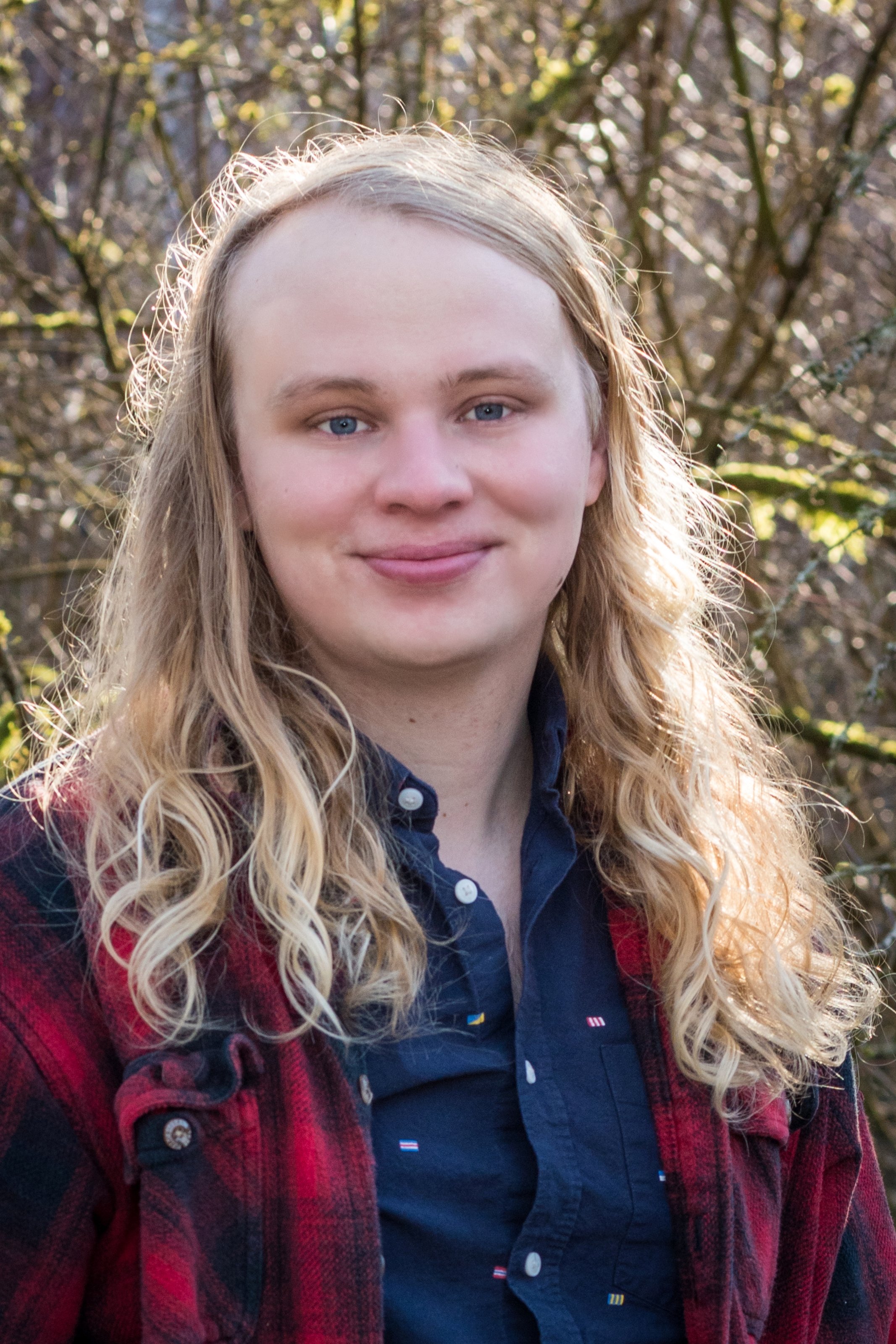
Keegan (he/him) is a writer currently living in Washington State with his family. His writing has appeared or is forthcoming from the Los Angeles Review, Salon, the Offing, Michigan Quarterly Review, Fourteen Hills, and Tahoma Literary Review, among others. His chapbook My Own Private Idaho was published by Red Bird Chapbooks.
Artwork: “Etch” by Daniel Lurie
Digital