Suri Parmar

Anaïs
Anaïs wants a better life. More interesting and worldly. Her mother christened her after Anaïs Nin, whom she studied in an undergrad feminist lit class. It doesn’t suit her dinky hometown, big box stores and anemic diners and weekend dollar store sales, gentle benedictions of cheap cosmetics and candy. When Anaïs grows into a middle-aged adult who struggles to afford six-dollar egg cartons and worries her husband and son are radicalized by manosphere pundits, she’ll remember her birthplace with longing.
The girls in her grade eleven class all have the same crunchy gelled curls and fat bubble handwriting. Knowing they won’t get Anaïs Nin and might find her slutty and weird, Anaïs tells them she was named after an aunt from Montreal. With the same shrewdness, she chooses the right best friend from those Jessicas and Michelles and Jenns. Elenia is every bit as pretty as Winona Ryder and Shalom Harlow, with her tweezed eyebrows and deadpan masculine drawl. She’s done it all – anything and everything her strict Catholic parents tell her not to do, all-nighters with guys and crystal meth binges. (“Everyone fucking does it,” she often avers to Anaïs, shrugging.) On weekends, she and Anaïs take the GO Train to downtown Toronto and wander Kensington Market, fingers linking as they try on vintage clothing and flirt with squeegee kids and share plastic trays of vegetarian sushi, and Anaïs almost feels like she matters and is part of things.
It’s not enough. Anaïs admits as much one night as they watch The Godfather on the classic movie channel. (Elenia’s choice, because young Al Pacino looks like young Leonard Cohen, her forever crush.) In between sips of amaretto stolen from her father’s liquor cabinet, Anaïs laments that everyone else at school and on TV and in the movies seems to have more fun.
“Nothing ever happens to me,” she adds.
Elenia pokes her. “You need a crush, chickie-bum. A cute guy, to keep you busy.”
“A woman needs a man like a fish needs a bicycle,” Anaïs says.
But she wonders if Elenia might be right. They switch the TV to MuchMusic and watch videos, Pulp and The Cardigans and Fiona Apple, day-glo and frenetic and yet languorous. Anaïs leans her head on Elenia’s shoulder. She breathes her smell that’s grown too familiar and comforting, weed and Herbal Essence shampoo. It fills her with the same old ache, of needing to shake up the world and leave her mark – like a supermodel rock star – but not knowing how.
The next Friday at a house party, Anaïs sneaks to the backyard to make out with Misha, a new boy at school. He’s not as tall as she’d prefer, and she dislikes that he spends his lunch breaks smoking with the mean and popular crew. But he talks about Kurt Vonnegut Jr. and has sleepy eyes – bedroom eyes, Elenia once noted encouragingly – though Anaïs has an inkling he looks that way because he’s stoned all the time. His lips are cold and taste like menthol cigarettes; his hands beneath her clothes are gentle. Slippery snow coats them and slides to the knotted patio boards, the remote chords of “Big Bang Baby” on the stereo fuzzing her ears. She exhales and feels a roadmap of icky memories fade from her breasts and groin and limbs, the lingering ghosts of probing past boyfriends with foul breath. She still doesn’t feel like a Disney princess, or like Angela in My So-Called Life.
Just like Elenia, Misha plays the part. At school, he holds Anaïs’s hand and tells everyone she’s his girl. He goes to her house for dinner and takes her to see Jerry Maguire at the downtown theatre, and Anaïs visits a walk-in clinic for birth control pills. He asks her to the school Valentine’s Day semi-formal. She wears a kerry-green satin dress from The Salvation Army with thigh-high socks and Doc Martens, hair twisted by Elenia into spiky top knots, a wilting lily corsage on her wrist. Anaïs perfunctorily poses for pictures with Misha against a backdrop of foil and construction paper clouds and hearts. When she sees her uncertain eyes and showy smile in the school yearbook months later, she’s reminded of the resin ballerina figurines at the neighborhood strip mall, garish and coated with dust.
By springtime, Misha has strolled out of her life, as easily as he entered. Guided by Princess Diana’s famous black “revenge dress,” Anaïs wears a slinky halter dress to the next school dance, a defiant spray of glitter on her bare back and shoulders. A strobe light spatters the gym walls and Korn barks from speakers. She approaches Misha and links arms like nothing has changed; he mumbles an offhand, “Yo,” and turns to his friends. Bereft and miserable, she flounces out of the gym. Not because she necessarily wants him back, but because he has the upper hand.
“Forget about him,” Elenia says in the bathroom as Anaïs seeps a few tears. Elenia blots and wipes her smeared eyeliner with a paper towel. “Let’s get the fuck out of here.” She reaches into her quilted Guess purse and hands Anaïs a freezer-burned pot brownie in a plastic baggie, an impulse purchase from her older brother’s scuzzy dealer. Given the source, Anaïs questions its potency, but she swallows half without hesitating. They head outside. A keen wind nips at Anaïs’s cheeks and temples. She shrinks in her purple PVC trench, strappy sling-backed heels sinking into muddy patches. The ground, dark with rain, the sky smoggy and purple grey. They walk past rows of ranch-style townhomes that look like Fisher Price buildings, dull brown and grey brick with fake white shutters. Out front of each, a young naked tree reinforced with wire.
They reach a playground at the lakefront. Elenia ambles to the top of the jungle gym and hoots when she reaches its summit. Anaïs wishes she were home drinking milky tea, nestled in dryer-warm sheets and reading Prozac Nation. She hikes up her skirt and follows Elenia, jacket creaking in protest, frail shoes slipping on the fake hemp ladder and sliding around her toes. “We can get to that tree from here,” Elenia says, gesturing at a tall oak whose sturdy boughs are an arm’s distance away. She balances on a railing and springs into branches with a sudden graceful movement Anaïs will realize is parkour decades later. Elenia perches on a limb like an owl, long hair tangled and askew, plaid shirttails dangling beneath her bomber jacket.
“I don’t know, I think my brownie’s kicking in,” Anaïs lies. Elenia tells her to take off her coat and shoes and go for it, a note of irritation in her voice. Anaïs doesn’t hear her. The clouds in the sky briefly clear. She stares across the lake at the flickering Toronto skyline, a city she wants to believe never sleeps. Not nearly as big or exciting as New York or Tokyo, so she’s heard, but for now it will do. Her eyes at a level with the CN Tower, its winking pinprick lights, and for a long moment the urgency within her quells.
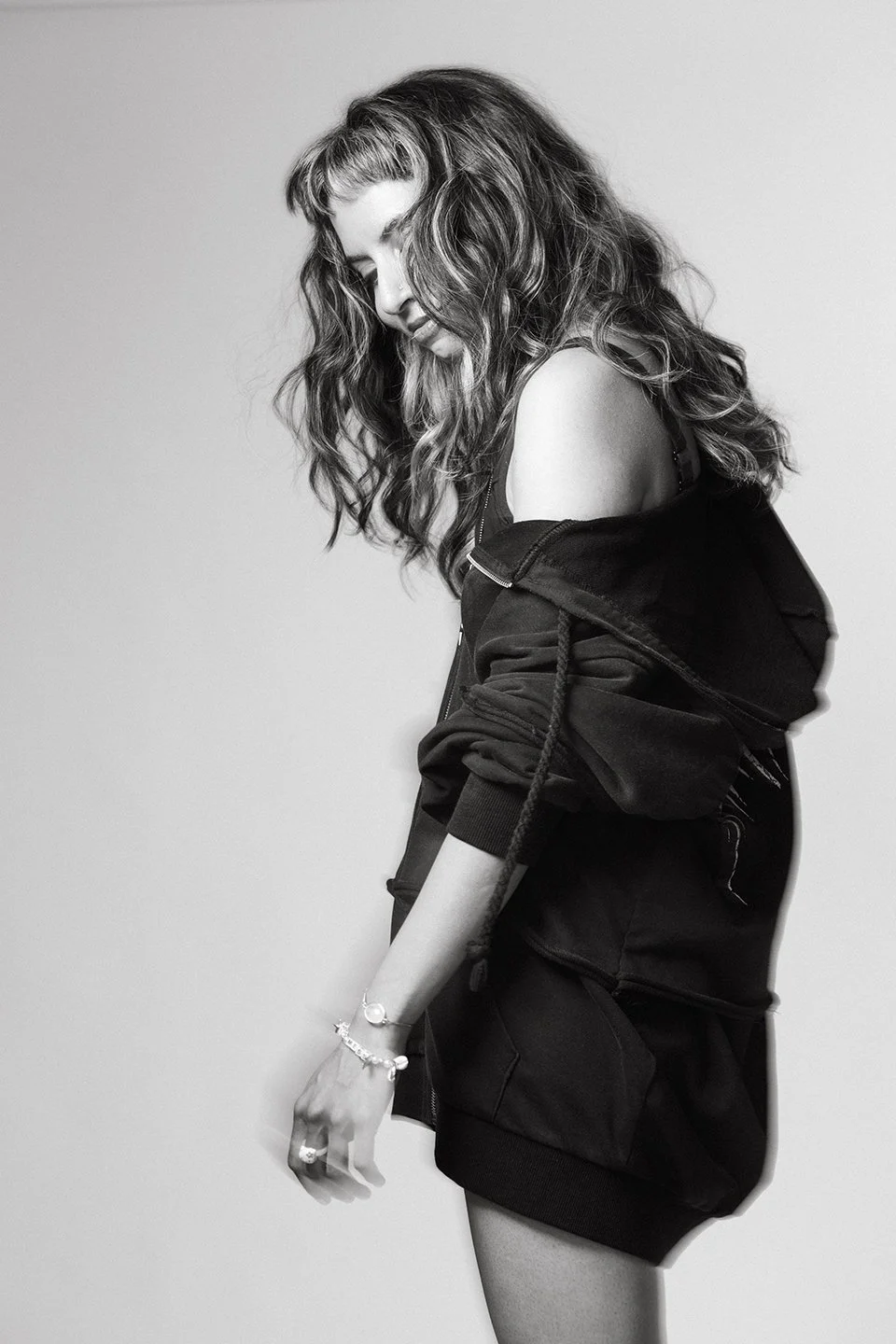
Suri Parmar (she/they) is a writer and filmmaker whose fiction has appeared in New Haven Review and The Spectacle. Her award-winning shorts have screened at Calgary International Film Festival and Big Sky Documentary Film Festival. She spends most of her free time playing computer games and online shopping for vintage Max Mara and Miu Miu clothing. You can check out her portfolio at suriparmar.com and follow her on Instagram at @hoodlumrock.
Artwork: “Or” by Daniel Lurie
Digital